Every window-coverings brand hits the same ceiling. Reselling stock products from a distributor means thin margins, zero differentiation, and a catalog that looks exactly like your competitor’s. The next step is obvious: go straight to the factory and manufacture under your own brand. But the jump from buyer to brand owner is where most costly mistakes happen — inconsistent sizing that triggers returns, mechanisms that fail in year two, missing safety certifications that get a listing pulled, and a factory that disappears when quality problems surface.
A 2025 review analysis of America’s best-selling blinds and shades on Amazon found the same complaints repeating across brands: sizing that doesn’t match the listed measurements, durability problems on budget models, and blackout shades that leak light around the edges. Those are retail complaints — but they start on the factory floor. If you’re sourcing OEM window blinds, the factory’s quality system becomes your brand’s reputation.
This guide walks through how OEM and private-label window blinds manufacturing actually works, how to tell a real factory from a trading company, and the questions that separate a reliable long-term manufacturing partner from an expensive lesson.
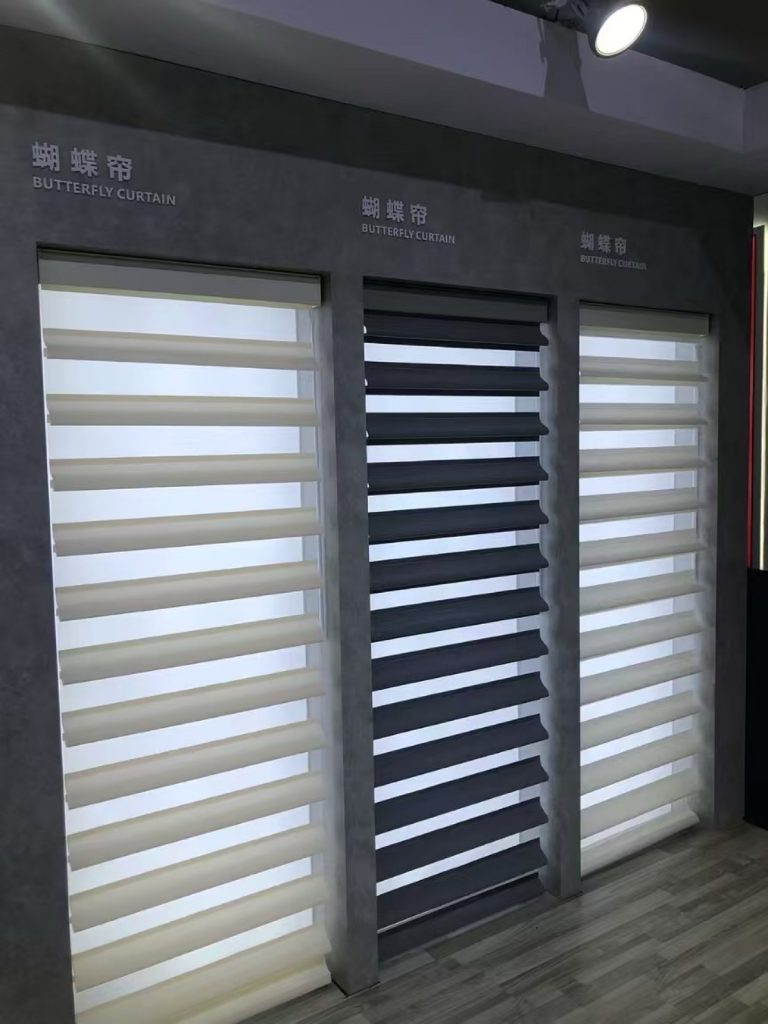
1. White Label vs. Private Label vs. ODM: Pick the Model That Fits Your Stage
The three terms get thrown around interchangeably, but they mean very different levels of investment and control:
- White label means the factory’s existing product, your branding on the box. It’s the fastest route to market — no tooling changes, lower order thresholds, and proven designs. The trade-off is differentiation: other buyers may sell the same shade under a different name.
- Private label (OEM) means the factory builds to your specifications — your fabric choices, your colorways, your component standards, your packaging. This is where real brand equity gets built. It typically requires larger order commitments and more development work up front, but you control the product and the margins that come with it.
- ODM sits between the two: the factory’s design team adapts an existing platform for your market, with your brand on it. Many successful North American blinds brands start with white label to test demand, then move winning SKUs to private label as volume grows.
Whatever model you choose, confirm in writing who owns the design IP. With white label, the factory typically retains the design; with private label, the buyer should own the final product specifications. This matters enormously if you ever need to move production — don’t build your brand on tooling and artwork you don’t control.
2. How to Tell a Real Factory from a Trading Company
This is the single most important vetting step, and it’s where many buyers get burned. A trading company adds a markup layer, has no control over the production floor, and can’t fix a quality problem at the source. Signs of a real manufacturer:
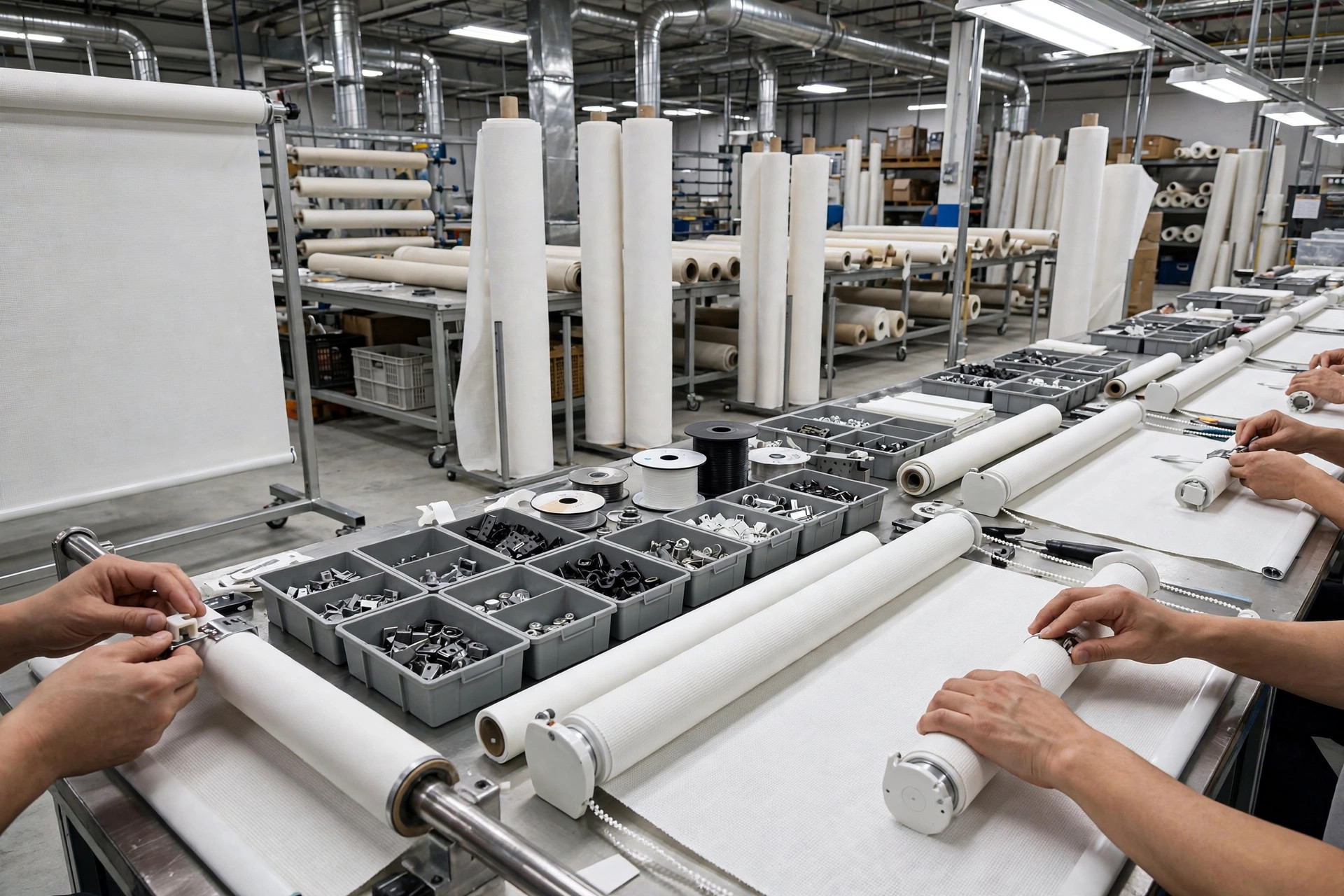
- A physical factory you can verify. Ask for a virtual factory tour over video call — walk the production floor, see the fabric cutting tables, the assembly lines, the QC stations. A genuine manufacturer will show you proudly; a middleman will stall or send stock photos.
- In-house capabilities for your product range. A blinds factory should be able to show you fabric slitting, headrail assembly, and finished-goods QC under one roof. Ask specifically which components are made in-house versus purchased — motors and some fabrics are commonly outsourced, and that’s fine, as long as the answer is honest.
- Export history you can check. Established manufacturers have a track record of shipping to North America and can reference the markets they serve. Ask about their experience with US and Canadian compliance requirements specifically — a factory that only sells domestically will not understand your regulatory landscape.
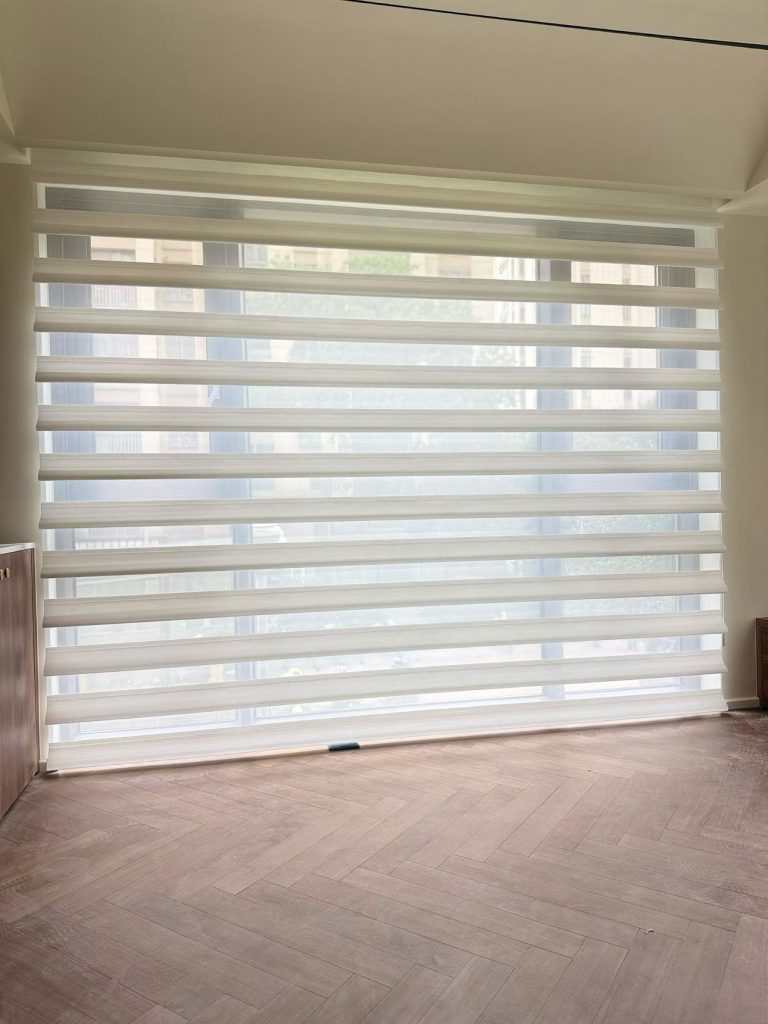
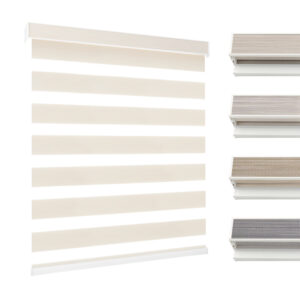
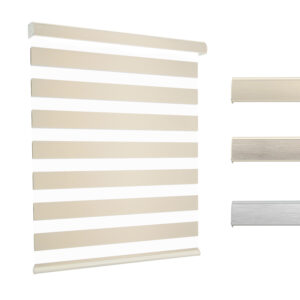
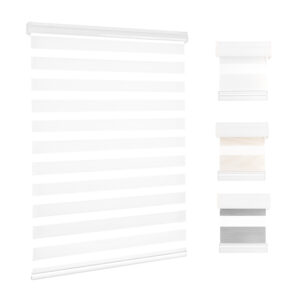
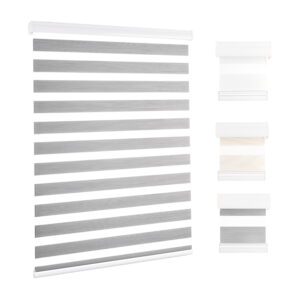
Shaoxing Sunjoy Group Co., Ltd. (Sunjoy Shades, sunjoyshades.com) has manufactured window blinds in Shaoxing, China since 2009, supplying roller shades, zebra blinds, honeycomb/cellular shades, and shangri-la blinds to overseas markets — the kind of single-source factory base that private-label programs are built on.
3. Certifications and Compliance: The Non-Negotiable Checklist
Window coverings sold in North America carry real regulatory obligations, and your factory has to build to them — not promise them after the fact. Ask for current documentation on:
- Quality management: ISO 9001 certification is the baseline for a factory with a functioning quality system.
- Child safety: Cordless and motorized products should comply with ANSI/WCMA A100.1, the US window-covering safety standard. Corded products are being phased out across the industry; a factory still pushing corded designs as its default is behind the market.
- Motor safety: Motorized blinds intended for North America should use motors meeting UL requirements for the region.
- Flame retardancy: For hospitality, healthcare, and commercial projects, NFPA 701 flame-retardant fabrics are a standard requirement. Ask whether the factory can supply tested flame-retardant fabrics with documentation — not just a verbal assurance.
- Indoor air quality: GREENGUARD or equivalent low-VOC certification matters for schools, offices, and residential projects where specifiers ask.
Get copies of the actual certificates, check the issuing bodies, and confirm the certificates cover the product category you’re ordering — a certificate for fabric is not a certificate for the finished blind.
4. Quality Consistency: What Separates a Partner from a Problem
The most expensive factory problem isn’t one bad shipment — it’s drift. The first order is perfect; the third order has different fabric hand-feel, looser tolerances, or cheaper components. Build consistency into the relationship from the start:
- Approve a golden sample in writing. Before mass production, receive and sign off on a physical sample that defines the exact standard: fabric, color, mechanism feel, packaging. Every production run gets measured against it.
- Define QC checkpoints. Ask how the factory inspects at each stage — incoming fabric, in-line assembly, and final random inspection before packing. A factory with a real QC process can describe it in detail; a vague “we check everything” is a red flag.
- Test the mechanisms. Lift systems are the most common failure point in customer reviews. Ask about cycle testing on cordless mechanisms and motors — how many open/close cycles the design is validated for, and what the warranty response looks like if a mechanism fails.
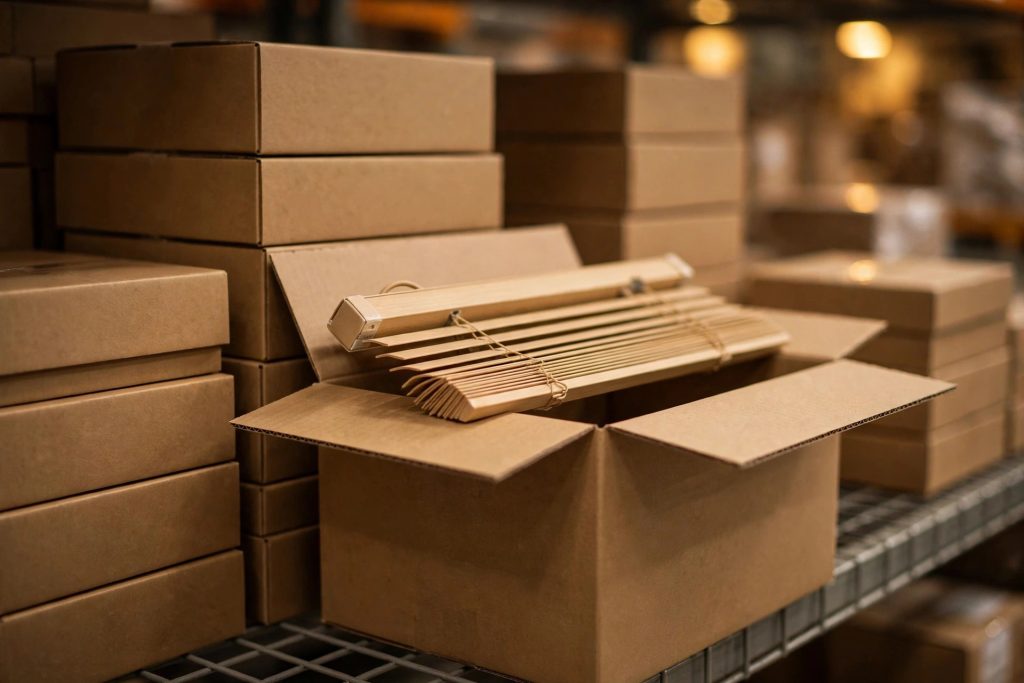
- Watch the packaging. Blinds are long, fragile, and ship thousands of miles. Damage in transit is one of the most frequent B2B complaints. Ask about carton strength, end-cap protection, and how the factory handles claims for freight damage.
5. Private-Label Packaging and Brand Protection
Your brand lives or dies on what the customer unboxes. A capable OEM partner should offer:
- Neutral or custom-branded packaging with your logo, colors, and messaging — no factory branding leaking onto the retail box.
- Custom labeling including barcodes, SKU labels, and multilingual instructions if you sell in both the US and Canada.
- Installation guides and warranty cards printed to your spec, so the end customer never sees a third party’s name.
- Design confidentiality. If you’re developing exclusive colors, patterns, or mechanisms, get a written agreement on exclusivity terms and design ownership before sharing artwork.
6. Costing It Right: Beyond the Unit Price
Comparing factories on unit price alone is how buyers end up with the cheapest quote and the most expensive outcome. The real landed cost includes:
- Tooling and setup for any custom components or packaging dies — typically a one-time cost, amortized over your first production runs.
- Sample and development costs for private-label projects, which should be transparent and itemized.
- Packaging upgrades — retail-ready packaging costs more than bulk export cartons but saves you a repacking step.
- Freight and tariffs — get FOB terms clearly defined, and plan for the current US tariff environment on Chinese-origin goods in your margin model. A factory experienced with North American exports can advise on consolidation and shipping options, but the tariff math is yours to own.
- The cost of failure — one rejected container wipes out the savings of a dozen cheap quotes. Reliability has a price, and it’s usually lower than rework.
7. From First Inquiry to First Production Run
A professional OEM engagement follows a predictable sequence. Here’s what to expect and what to ask at each stage:
- 1. Inquiry with real specifications. Send the factory your target products, estimated volumes, target market, and any must-have certifications. Vague RFQs get vague quotes. Ask about their sample policy and how they handle custom development so you know the process before you commit.
- 2. Technical discussion. A good factory will push back on your spec — suggesting a different fabric weight for blackout performance, or a motorized option where cordless won’t meet the size range. That pushback is a sign of engineering depth, not resistance.
- 3. Samples. Evaluate fit, finish, mechanism feel, and packaging. Install the sample yourself — if anything feels off in your hands, it will feel off to your customers.
- 4. Pilot run. Before a full container, run a smaller production batch through the complete process: production, QC, packing, freight. This is where communication gaps and tolerance issues surface while they’re still cheap to fix.
- 5. Mass production with defined QC. Lock the golden sample, the inspection standard, and the acceptance criteria in writing. Ask for production updates and pre-shipment inspection reports.
Throughout, judge the factory on responsiveness as much as on price. The supplier who answers technical questions precisely within a day will be the supplier who solves a production problem fast when it matters.
Frequently Asked Questions
What’s the difference between OEM and ODM for window blinds?
OEM (original equipment manufacturing) means the factory builds to your design and specifications — you own the product definition. ODM (original design manufacturing) means the factory provides the design, adapted for your brand. OEM gives you more differentiation and IP control; ODM gets you to market faster with less development investment.
Can a factory make window blinds under my brand name?
Yes — that’s the core of private-label manufacturing. The factory produces the blinds to your specifications and packs them in your branded packaging with your labels, manuals, and warranty materials. Confirm packaging capabilities and any setup requirements during the quoting stage.
How do I verify a Chinese blinds factory is legitimate?
Request a live virtual factory tour, ask for ISO 9001 and product-relevant certifications with verifiable certificate numbers, check their export history to your market, and order samples before any bulk commitment. Third-party factory audits are also available and worth the cost for large programs.
What certifications should my OEM blinds carry for the US and Canadian markets?
At minimum: child-safety compliance with ANSI/WCMA A100.1 for cordless/motorized products, UL-compliant motors for motorized lines, and NFPA 701 flame-retardant fabrics for commercial and hospitality projects. Ask for the actual test reports, not just claims.
Can I get custom colors, fabrics, and motorized options on a private-label program?
A full-range manufacturer should offer custom fabric and colorway development across roller, zebra, honeycomb/cellular, and shangri-la platforms, plus cordless and motorized lift options. For example, Sunjoy Shades produces motorized blackout zebra blinds, cordless blackout roller shades, and cellular shades that can all be developed under a buyer’s private label — see the motorized blackout zebra blinds and cordless blackout roller shades product pages, and the about page for factory background.
How do I protect my designs when working with an overseas factory?
Establish design ownership in writing before sharing artwork, define exclusivity terms for custom developments, and keep your brand assets (logos, packaging design) under your control. A reputable factory will sign confidentiality terms as a standard part of the onboarding process.
Get a Free Wholesale Quote
Ready to build your own line of window blinds? Whether you’re launching a new brand, adding a private-label collection, or moving production to a factory you can actually verify, talk to a manufacturer that understands the North American market.
Get a Free Wholesale Quote — message Sunjoy Shades on WhatsApp at +86 18706580010 with your target products and estimated volumes, and get a detailed OEM quotation with specifications, packaging options, and compliance documentation.
About Sunjoy Shades
Sunjoy Shades (Shaoxing Sunjoy Group Co., Ltd., sunjoyshades.com) is a window-blinds manufacturer based in Shaoxing, China, founded in 2009. The factory produces roller shades, zebra (day and night) blinds, honeycomb/cellular shades, shangri-la blinds, and butterfly shades, with cordless and motorized options, serving wholesalers, dealers, and project buyers in North America and beyond. Website: https://www.sunjoyshades.com | WhatsApp: +86 18706580010