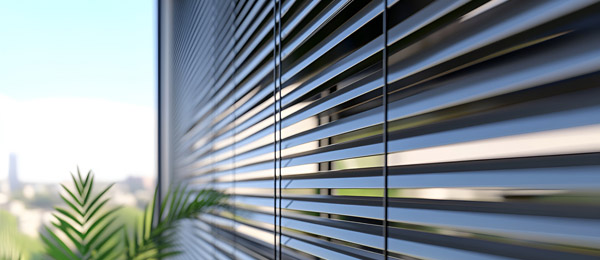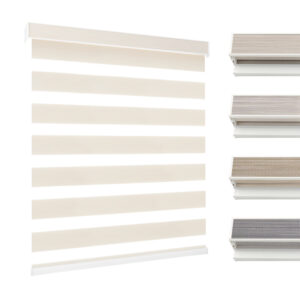
If you sell window coverings for a living, you have had this conversation: a homeowner walks into your showroom, asks about motorized shades, and then shows you an online listing where a motorized roller shade sells for around $120. Your professional quote for the same window is three or four times that. The customer looks at you like you are the one overcharging.
That gap is exactly why “how much do motorized blinds cost” is one of the most searched questions in this category — and why dealers and wholesalers need a better answer than a single number. This guide breaks down what motorized blinds actually cost in 2026, where each dollar goes, what after-sale costs catch dealers off guard, and the questions to ask a factory before you commit inventory to a motorized line.
The Short Answer: Motorized Blind Price Ranges in 2026
Across US pricing guides and dealer price sheets updated for 2026, professionally quoted motorized blinds fall into consistent ranges per installed window:
- Motorized roller shades: $400–$900
- Motorized cellular (honeycomb) shades: $450–$1,200
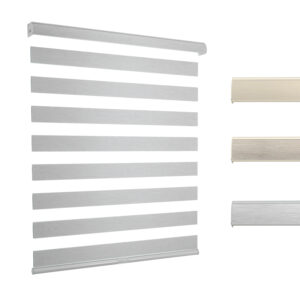
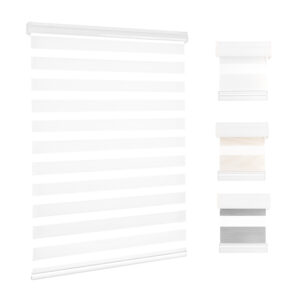
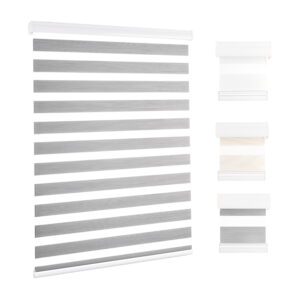
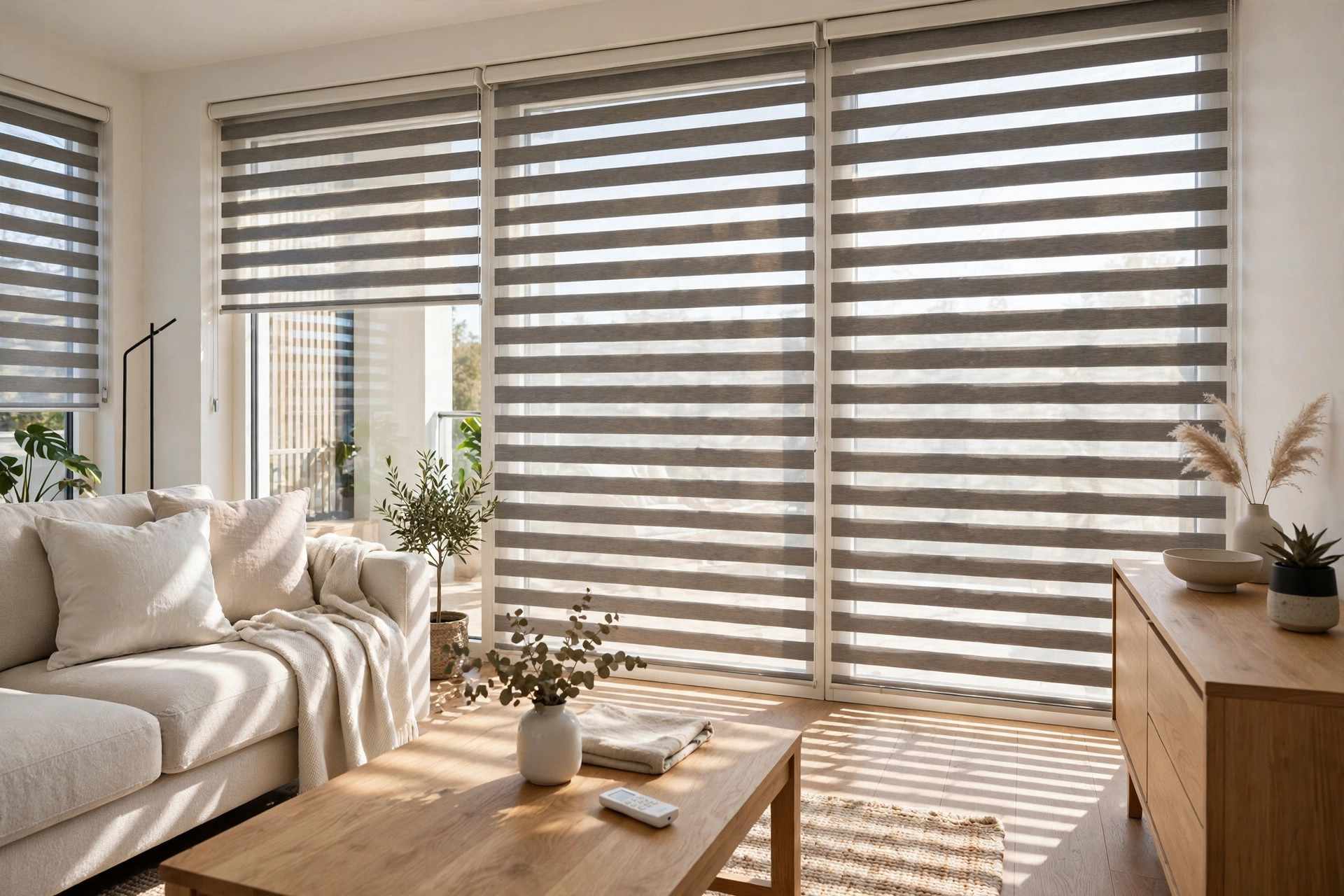
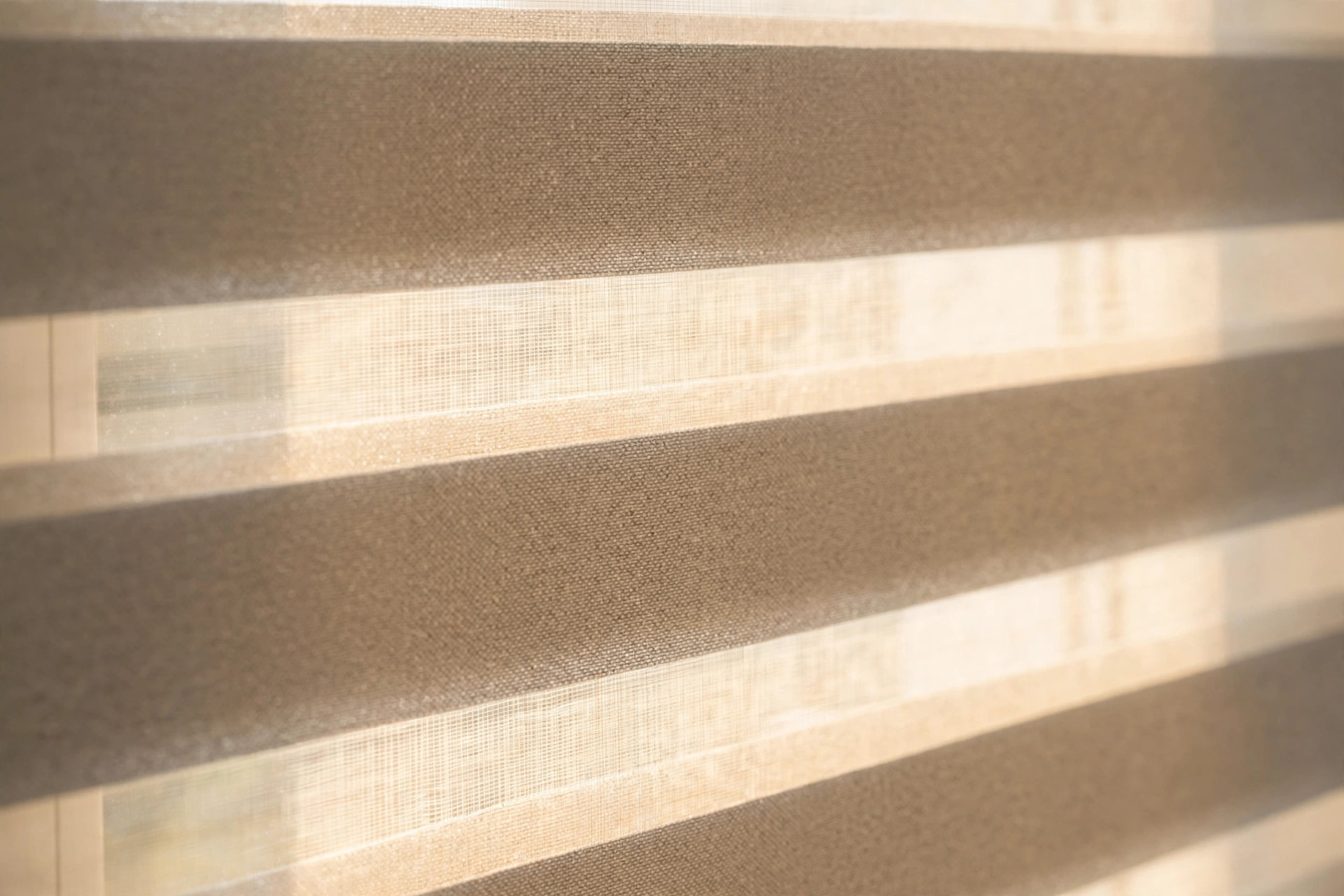
- Motorized zebra blinds: $800–$1,500
- Motorized roman shades: $600–$1,500
- Motorized wood / faux wood blinds: $350–$800
Window size moves the number substantially. Small windows (24″ × 36″ and under) typically land in the $300–$600 range; mid-size windows run $500–$900; large windows reach $900–$1,500, and oversized or panoramic glass can push $1,200–$2,500 per window. Custom-made sizes — which are the norm in dealer channels — generally cost 30–50% more than ready-made stock sizes, while whole-house orders often carry 10–20% volume discounts.
These are installed prices through professional channels. They are not the price of a shade in a box — and that distinction is where most customer confusion (and most dealer margin) lives.
Where the Money Goes: The $150–$400 Motorization Premium
Compared with the identical manual version of the same shade, adding a motor typically adds $150–$400 per window. Understanding the components of that premium turns an awkward pricing conversation into a professional one:
The motor and tube assembly. This is the bulk of the premium. Tubular motors differ in torque, speed, and noise level. Listings commonly advertise noise ratings around 35 dB — roughly the level of a quiet conversation — but cheaper motors run noticeably louder. If your customers will operate bedroom or conference-room shades, motor quality is worth specifying by name, not assuming.
Controls. A basic single-channel remote controls one window. Multi-window setups need multi-channel remotes (commonly up to 15 channels) or wall switches — each an additional line item. A common buyer frustration: discovering that one remote does not control the whole room.
Smart features. App control, voice-assistant compatibility, and scheduling typically add $50–$150 per window on top of the motor. Crucially, voice control almost always requires a separate hub — typically a $50–$150 one-time purchase — that is not included in the box. Product listings often bury this detail in the fine print, and it is one of the most frequent sources of negative buyer reviews: the shade arrives, and the promised smart-home integration does not work without an extra purchase.
Installation. Professional installation runs $50–$150 per window. Hardwired setups cost more because they require an electrician.
When you itemize these four components for a customer, the $120 online listing suddenly looks like what it is: a DIY shade with a basic motor, a single remote, no installation, no hub, and no one to call when something goes wrong.
The Power-Source Decision Tree: Battery, Plug-In, or Hardwired
The power source is the single biggest driver of both upfront cost and long-term satisfaction — and it is the question dealers should ask before quoting. Each route has an honest trade-off:
Rechargeable battery (most common in retrofit). Lowest upfront cost, no wiring, easiest install. The honest trade-off is maintenance: a typical charge lasts roughly 6–12 months depending on window size and daily usage. For high or hard-to-reach windows, recharging means a ladder — a genuine pain point buyers complain about in forums. South-facing windows can pair with a solar charging panel to stretch the interval, which is a strong upsell for sun-exposed glass.
Plug-in (DC adapter). Inexpensive and always ready, but it requires a nearby outlet and leaves a visible cord — a poor fit for clean, high-end interiors.
Hardwired (AC). The most reliable option and the standard choice for new construction: no batteries, no visible cords, no recharging. But it requires an electrician to run wiring inside the wall, which makes it the most expensive upfront route. Industry consensus among installers is blunt: if you can hardwire, hardwire.
As a rule of thumb for project planning: new construction → hardwire during the build; finished interiors → battery plus solar panels for sun-exposed windows; hotels and short-term rentals with dozens of identical windows → uniform power with centralized control to keep housekeeping and maintenance simple.
Why the Online Listing Is $120 and Your Quote Isn’t
This deserves its own section, because it is the conversation that decides whether you keep the customer. Here is the honest dealer script, built from the components above:
- Custom sizing. Online budget listings cover standard sizes. Your customer’s windows usually aren’t standard — and a custom order that gets measured wrong can’t simply be returned. Many custom listings auto-proceed to production if the buyer doesn’t confirm within 48 hours.
- Installation. The $120 listing assumes a handy homeowner with a drill. Your quote includes a professional who measures, mounts, and aligns everything — plus comes back if it doesn’t sit right.
- Support and warranty. A motor that fails in year two on a $120 purchase is a replacement order. A motor that fails on your job is a service call you handle. Note the fine print buyers rarely read: motor warranties frequently cover the part but not the labor to replace it. Know your factory’s policy before you promise anything.
- Motor life. A budget tubular motor and a quality one don’t just differ in noise — they differ in years of daily cycles. For a dealer, the after-sale cost of a failed motor (truck roll, ladder time, customer goodwill) dwarfs the upfront savings of the cheapest motor.
Dealers who walk customers through these four points don’t just defend their margin — they look like the professional in the room.
The True Cost of Ownership Dealers Underestimate
The purchase price is only the first invoice. The costs that erode dealer margins on motorized lines are the ones that arrive later:
- Battery replacement cycles. Even rechargeable systems eventually need new battery packs, and battery compartments on budget shades can become brittle with UV exposure over time — a real failure mode reported by installers.
- Remote and pairing issues. Pre-paired remotes and wireless protocols can fail within the first year or two. If a shade’s wireless standard doesn’t match the customer’s smart-home ecosystem, the “smart” feature becomes a support ticket.
- Warranty fine print. Confirm in writing whether the motor warranty covers on-site labor or parts only. One well-documented buyer case: a motor failed under warranty, and the warranty didn’t cover the technician’s visit.
- Noise complaints. A motor that sounds fine in a showroom can sound very different at 6 a.m. in a bedroom. Specify noise expectations for sleeping areas.
None of these are reasons to avoid motorized lines — motorized is where the category’s growth is. They are reasons to choose the right motorized line, from a factory that answers these questions in writing.
Where Motorized Blinds Pay Off: Upsell Scenarios That Close the Sale
Motorization sells itself in the right scenarios. Train your team to spot them:
- Large and tall windows. A manual shade on a 10-foot window is a workout; a motorized one is a button press. High windows that would need a ladder for cord operation are the clearest motorized use case.
- Hard-to-reach glass. Skylights, stairwell windows, and glass behind furniture — anywhere a hand can’t comfortably reach.
- Whole-house projects. Once the first two motorized windows are quoted, the incremental cost per additional window (and the volume discount) makes whole-house packages the natural close. Scheduled scenes — morning open, evening close — are the demo that sells the third, fourth, and fifth window.
- Hospitality and commercial. Hotels, offices, and rental properties value uniform appearance and centralized control; scheduled operation also cuts the labor of daily manual adjustment.
Note the natural price ladder from our child-safe cordless guide: cordless for safety-conscious families, motorized for convenience and hard-to-reach glass. Many dealers quote both on the same visit and let the customer choose their tier.
5 Questions to Ask a Factory Before You Stock Motorized Blinds
Some dealers have publicly walked away from selling motorized blinds after too many complaints. The difference between that outcome and a profitable motorized line usually comes down to vetting the supplier. Before you commit, get written answers to:
- What motor options do you offer, and what is the rated noise level? Ask for the dB figure, not “quiet.”
- What is the realistic battery life per charge, and how is the battery accessed on high windows? “Up to a year” in a lab is not a number you can quote.
- Does the motor warranty cover on-site labor, or parts only? Get the exact terms.
- What control protocols are supported, and is a hub required for smart-home integration? If a hub is needed, is it included or a separate purchase — and what does it cost your customer?
- What is your defective-motor replacement process and turnaround time? Your customer will judge you, not the factory, when a motor fails in month eight.
These questions pair naturally with the dealer-focused vetting approach in our window treatment trade program guide — the buying discipline is the same whether the project is one villa or two hundred hotel rooms.
FAQ
How much do motorized blinds cost per window in 2026?
Professionally installed motorized blinds typically run $400–$1,500+ per window, depending on the shade type, size, power source, and smart features. Motorized roller shades start around $400; motorized zebra and roman shades run $600–$1,500; oversized windows can exceed $2,000.
How much more expensive are motorized blinds than manual blinds?
Adding a motor typically adds $150–$400 per window over the identical manual shade. Smart features (app/voice control, scheduling) add roughly $50–$150 more per window, plus a one-time hub purchase of $50–$150 if voice integration is required.
Are battery-powered or hardwired motorized blinds better?
For new construction, hardwired is the most reliable — no batteries, no visible cords. For finished interiors, rechargeable battery motors are the practical choice, with a typical charge lasting 6–12 months. Solar charging panels extend that interval on sun-exposed windows.
Why are motorized blinds so much cheaper on Amazon?
Budget online listings are typically standard-size, DIY-install shades with basic motors, single remotes, and no hub or installation included. Professional quotes cover custom sizing, installation, support, and warranty service — the four items that account for most of the price difference.
Do motorized blinds need a hub for Alexa or Google Home?
In most cases, yes — voice control requires a separate hub that is usually sold separately ($50–$150). Always confirm hub compatibility with the customer’s smart-home ecosystem before quoting a “smart” package.
What should wholesalers check before ordering motorized blinds in bulk?
Verify motor noise ratings, realistic battery life, whether the warranty covers on-site labor, control protocol and hub requirements, and the defective-unit replacement process. A factory that answers all five in writing is one you can build a motorized line on.
Get a Free Wholesale Quote
If you’re a wholesaler, dealer, or project buyer evaluating a motorized line for 2026, talk to the factory before you commit. Sunjoy Shades (Shaoxing Sunjoy Group Co., Ltd., sunjoyshades.com) manufactures roller shades, zebra blinds, cellular shades, and shangri-la blinds — including motorized and cordless options — with OEM and private-label programs for North American partners. Send us your window schedule or project specs and we’ll work up a factory-direct quotation.
WhatsApp: +86 18706580010
About Sunjoy Shades
Sunjoy Shades (Shaoxing Sunjoy Group Co., Ltd.) has manufactured window coverings in Shaoxing, China since 2009. Our product range covers roller shades, zebra (day-and-night) blinds, honeycomb/cellular shades, shangri-la blinds, and butterfly shades — in manual, cordless, and motorized configurations — with OEM/private-label service for wholesalers, dealers, and project buyers. Website: sunjoyshades.com · WhatsApp: +86 18706580010.