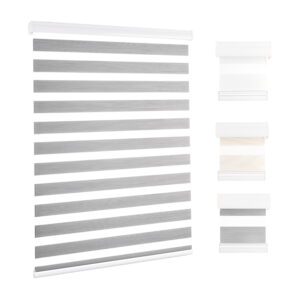
Child Safe Window Blinds: What North American Dealers Need to Know After the 2024 Cordless Rule
Every window-covering dealer in North America has lived this moment: a young parent walks into the showroom, points at a display, and asks, “Is this one safe for my kids?” If the honest answer requires hedging — “well, there’s a cord, but you can tie it up” — the sale is already in trouble. And since June 1, 2024, that question has stopped being just a sales objection. It is now a compliance question.
On that date, the updated American National Standard for window-covering safety, ANSI/WCMA A100.1-2022, took effect across the United States. The vast majority of new window coverings sold in the country must now be cordless, or have operating cords that are inaccessible or too short to form a hazardous loop. Canada has moved in the same direction: Health Canada’s Corded Window Coverings Regulations (SOR/2019-97), in force since May 2021 with stepped-up enforcement from May 2022, cap reachable cords at 22 cm and any cord-formed loop at a 44 cm perimeter. For wholesalers, dealers, designers, and contractors, child safe window blinds are no longer a niche upsell category — they are the baseline of what you can legally and credibly sell.
This guide explains the rule in plain terms, compares the compliant operating systems, flags the quality traps that drive dealer returns, and gives you a checklist for vetting a cordless supplier before your next bulk order.
The Rule That Changed Everything: June 1, 2024
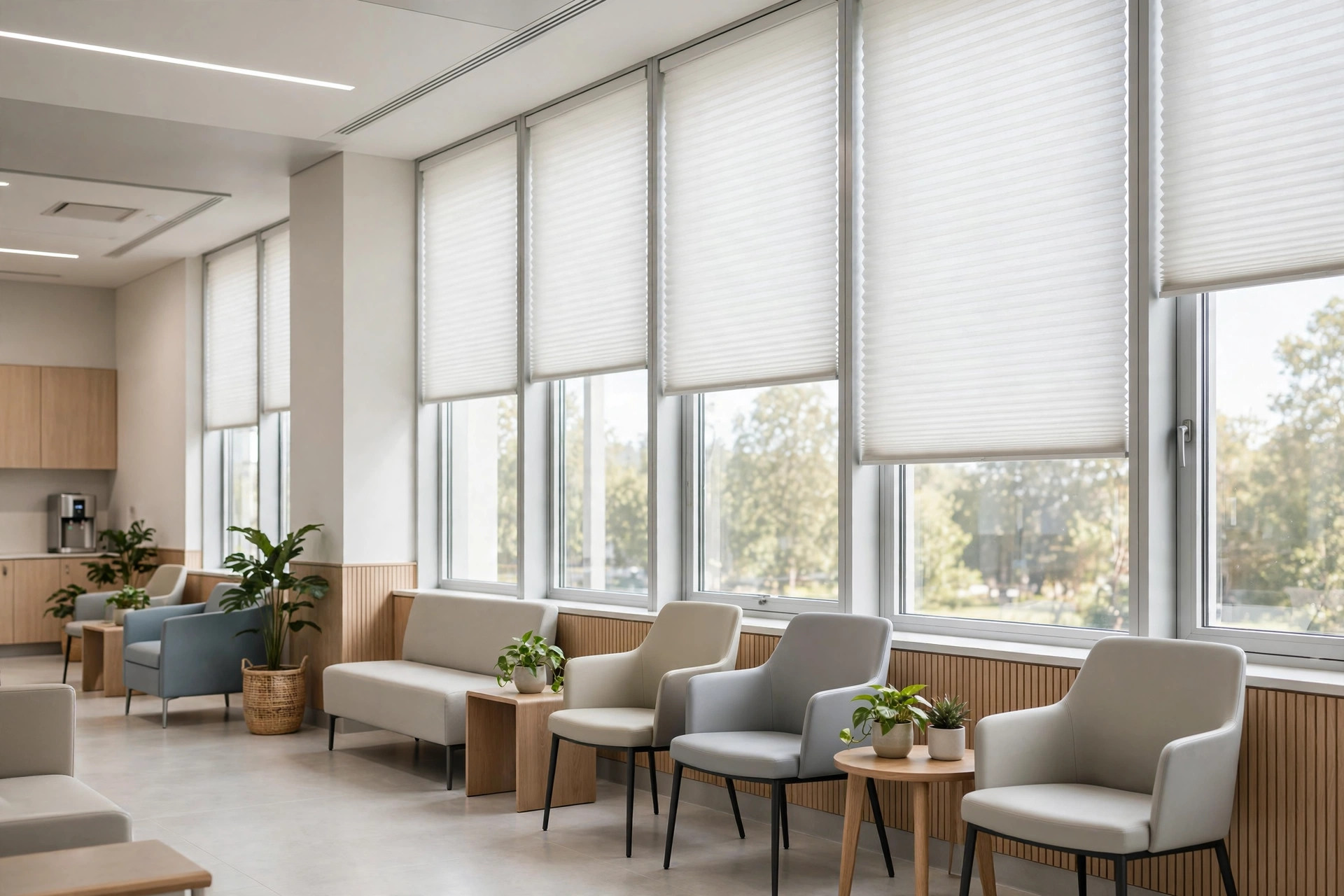
Understanding the standard is the first step to turning it into a sales advantage.
Under ANSI/WCMA A100.1-2022, stock products (ready-made, off-the-shelf sizes — the bulk of what big-box and online sellers move) must have operating and tilt cords that are either not present, inaccessible to a child, or no longer than 8 inches in any position. In practice, that means cordless. For custom products (made to a buyer’s measurements — the dealer’s bread and butter), the standard eliminated free-hanging operating cords, free-hanging tilt cords, and multi-cord connectors entirely. Continuous-loop systems are still permitted, but only with a compliant tension device that anchors the loop to the wall so a hazardous free-hanging loop cannot form. Operating cords on custom products are capped at 40 percent of the blind’s height by default. Inner cords — the ones running through slats or fabric — must be inaccessible or unable to create an opening larger than a child’s head, and every product must carry a permanent label on the headrail identifying the manufacturer, the date of manufacture, and whether it is “Custom” or “Stock.”
Enforcement is real, not theoretical. The U.S. Consumer Product Safety Commission (CPSC) treats non-compliant stock products as a substantial product hazard — imports can be refused admission, and sellers face reporting obligations plus civil and potentially criminal penalties. In September 2025, the CPSC recalled roughly 133,000 corded zebra blinds sold on Amazon, citing child strangulation and entanglement hazards. No injuries had been reported, but the message to the trade was unmistakable: corded inventory is a liability, not an asset.
Canada’s rule is arguably stricter in its numbers. Health Canada requires that any reachable cord, pulled in any direction, measure no more than 22 cm — and any loop it can form no more than 44 cm around. Critically, Health Canada has stated that add-on fixes do not count: cord shields, sleeves, or other aftermarket devices cannot make a product compliant. The product must meet the regulation as received by the consumer. More than 350 products were recalled in the first six months of stepped-up Canadian enforcement.
The takeaway for buyers: the era of “we’ll just include a cord cleat” is over on both sides of the border. What sells now is product engineered cordless from the start.
“Cordless” Is Not One Product: Four Compliant Operating Systems
One of the costliest misunderstandings in the trade is treating “cordless” as a single feature. In reality there are four distinct compliant operating systems, and they serve different price points and use cases. Dealers who can explain the differences close more sales.
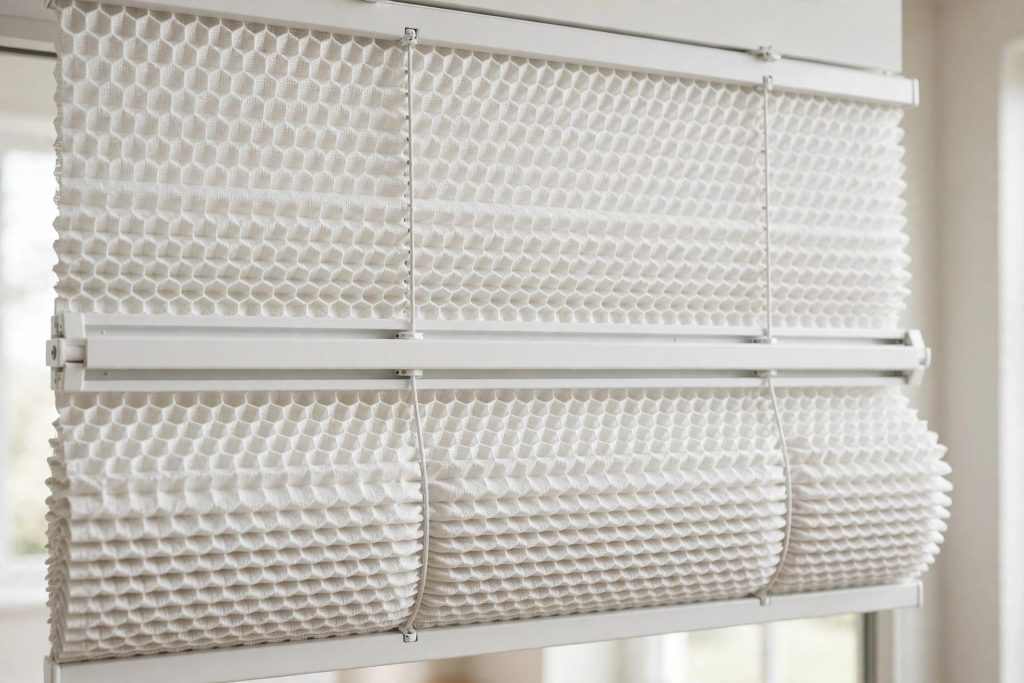
- True cordless (spring push-pull). The workhorse of the child-safe category. A spring-balanced mechanism in the headrail lets the user raise or lower the shade by simply pushing up or pulling down on the bottom rail — no operating cord at all. This is the system behind most cordless cellular shades and cordless roller shades, including Sunjoy Shades‘ cordless honeycomb line (cordless light-filtering cellular shades with top-down/bottom-up operation). It hits the value price point parents expect and satisfies the standard outright.
- Motorized. A battery or hardwired motor does the lifting; control is by remote, wall switch, or app. Motorized shades have no operating cords by definition, making them inherently child-safe — and they solve the “hard-to-reach window” problem at the same time. See our motorized cellular shades for the category. Higher ticket, higher margin.
- Wand or crank operation. A rigid wand (common on verticals and some horizontals) or a crank handle replaces the cord pull. No loop, no free-hanging cord — compliant, and familiar to commercial buyers.
- Tensioned continuous loop with a compliant device. The one corded-looking option the standard still allows: a loop anchored taut to the wall or window frame with a tested tension device, so no free-hanging loop can form. It must be installed correctly to stay compliant — a point worth stressing to contractor clients, because a loop installed without its tensioner is a non-compliant installation.
A word of caution drawn from real buyer experience: not everything labeled “cordless” is truly cord-free. Independent buying guides repeatedly warn that some products marketed as cordless still hide small cords or loops. When vetting a supplier, test the actual mechanism — and ask how inner cords are shrouded — rather than trusting the word on the box.
The Quality Traps That Cost Dealers Money
Compliance gets the product onto the shelf. Quality keeps it from coming back. Cordless mechanisms are the single biggest source of the complaints real buyers post about window coverings, and every return lands on the dealer’s margin. The recurring failure patterns are well documented:
- The shade that won’t stay up. The classic cordless failure: lift the bottom rail halfway, let go, and the shade slides back down. This is a spring-tension defect or a worn mechanism — and it is the defect most likely to trigger an angry review.
- The shade stuck halfway. Cellular shades in particular can settle and refuse to retract fully. The standard field fix — pulling the shade fully down, holding it at a 45-degree angle, and giving it a few gentle tugs to reactivate the springs — tells you exactly where the weak point is: the spring system.
- Stiff operation on wide units. The wider and heavier the shade (blackout fabrics are the worst offenders), the harder the push-pull action. A mechanism tuned for a 24-inch shade may be miserable at 72 inches. Cheap mechanisms also run noisy.
- Friction-clip problems. Some designs use friction clips for tension; when clips are too tight, broken, or poorly molded, the shade binds or drifts.
- Thin-fabric delamination. On top-down/bottom-up cellular shades, very thin fabrics joined with adhesive can separate at the edges over time — a slow failure that shows up months after installation, right in the warranty window.
None of these are mysterious. They are all things a serious factory tests for: cycle testing (thousands of raise/lower repetitions), mechanism performance across the full width range, and fabric construction that survives years of sun exposure. When a supplier cannot show you a mechanism in motion on video, or cannot explain its cycle-test protocol, treat that as the red flag it is. Sunjoy Shades (Shaoxing Sunjoy Group Co., Ltd., sunjoyshades.com) manufactures its cordless lines — including cordless blackout roller shades — with the mechanism matched to the shade’s weight class, because a cordless system is only as good as the spring or motor behind it.
Where Child-Safe Demand Actually Comes From
Child-safe is not just a residential story. Dealers who know where the demand concentrates can prospect far more efficiently:
- Nurseries and playrooms. The single most cited use case in buyer guides: cordless is considered essential for nurseries, and young parents are the buyers who ask the safety question first and price-shop last.
- Schools and daycare centers. Institutional buyers specify cordless as a matter of policy — and they buy in volume per project.
- Short-term rentals and property management. Airbnb hosts and property managers outfit dozens of units at a time; a single strangulation incident is an existential business risk for them, which makes child-safe the easy specification.
- Hospitality family rooms and senior living. Hotels increasingly designate family-friendly room categories, and senior-living operators favor cordless for residents with limited dexterity — no cords to tangle, nothing to pull.
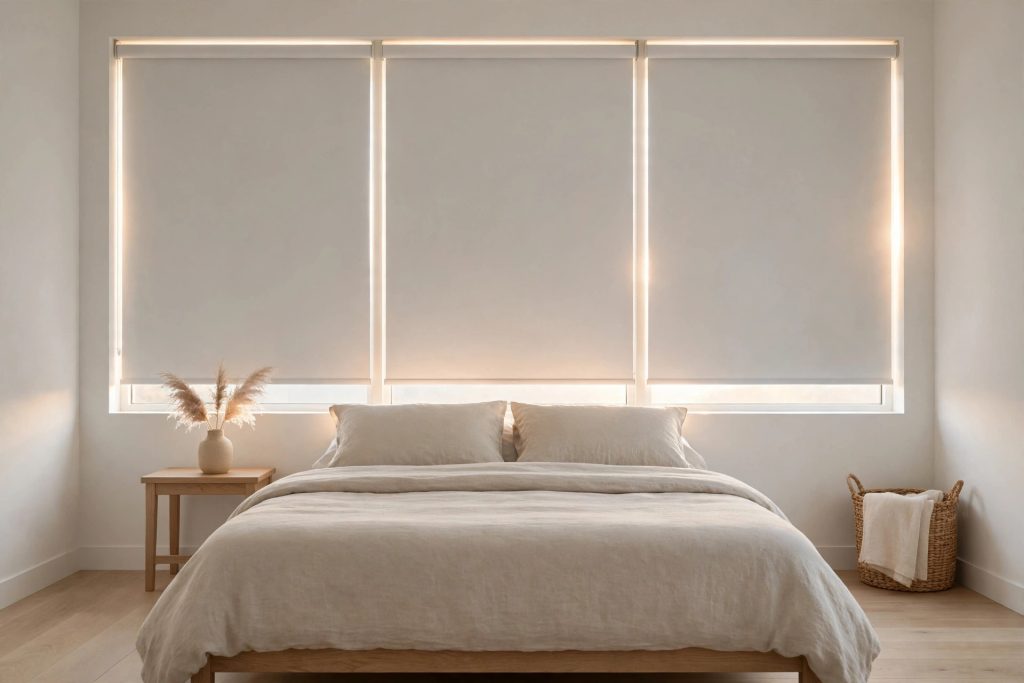
- Street-level and ground-floor bedrooms. The overlap of the child-safe buyer and the blackout buyer is large: parents want both safety and darkness for naps. Cordless blackout combinations are the natural bundle.
For each of these segments, the pitch is the same: compliance is not a cost center, it is the reason to buy from you instead of from a seller still clearing corded stock.
Cordless vs. Motorized: When to Upsell
Both are compliant. The choice is about the window, the wallet, and the wow factor.
Recommend cordless for standard residential windows, nurseries, rentals, and any project where the buyer wants the safety story at a value price. Push-pull operation is intuitive — children, grandparents, and tenants all figure it out in seconds — and there is no battery to charge and no remote to lose.
Upsell to motorized when the window is large, tall, or hard to reach (stairwells, great rooms, skylights), when the client is already buying into smart-home control, or on commercial projects where scheduled operation matters — a motorized shade can be programmed to lower during peak sun hours, cutting cooling load. The honest trade-offs to disclose: higher upfront cost, and battery-powered units need periodic recharging (a real buyer complaint when battery compartments are poorly designed). For a dealer, motorized is the higher ticket per window and the stronger showroom demo — the remote-control moment closes.
Stocking both from one supplier simplifies everything: one relationship, one quality standard, matched fabrics across operating systems so a client can mix cordless in the bedrooms and motorized in the great room without a visible mismatch.
A Buyer’s Checklist for Vetting a Cordless Supplier
Before placing a bulk cordless order, run the supplier through these questions. Vague answers are disqualifying.
- Compliance documentation. Can the factory state which standard each product is built to — ANSI/WCMA A100.1-2022 for the US market, Health Canada’s CWCR for Canada — and show the permanent Custom/Stock labeling on the headrail? Ask for photos of the actual label.
- Mechanism durability. What is the cycle-test protocol? Can you see a video of the mechanism operating a full-width unit, not just a narrow sample?
- Width-matched engineering. Is the spring or motor system sized to the shade’s weight class, or is one mechanism used across all widths? (This is where the “won’t stay up” failures come from.)
- Inner-cord construction. On cellular and pleated products, how are inner cords shrouded or made inaccessible? Ask directly — this is the detail behind the “not really cordless” complaints.
- Samples and swatches. Can you get fabric swatches and a working mechanism sample before committing to volume? Evaluate the push-pull feel yourself; a stiff sample will be a stiff thousand units.
- Replacement parts and warranty. Springs, bottom rails, and brackets wear. Does the supplier stock replacement mechanisms, and what is the warranty position in writing?
- Export packaging. Neutral, well-protected cartons matter if you rebrand or distribute — confirm plain-carton packing is available.
A manufacturer that answers all seven crisply is a manufacturer you can build a child-safe program on. Sunjoy Shades (Shaoxing Sunjoy Group Co., Ltd.) has supplied cordless and motorized window coverings to North American wholesalers and dealers since 2009, and welcomes this exact due-diligence conversation — including mechanism samples before volume orders.
FAQ
Are cordless window blinds required by law in the United States?
Since June 1, 2024, the industry standard ANSI/WCMA A100.1-2022 has required that the vast majority of new window coverings sold in the US be cordless or have inaccessible or very short cords. The CPSC enforces the stock-product requirements as a substantial product hazard, with import refusal and recall authority. In practice, cordless is the default for anything newly manufactured.
Are cordless blinds really 100% cord-free?
“Cordless” means no operating cord that you pull — you operate the shade by pushing or pulling the bottom rail, a wand, or a remote. Inner cords that run inside the headrail or through the fabric may still exist, but under the current standard they must be inaccessible to children. If a product marketed as cordless has any reachable cord or loop, it is not truly compliant — inspect before you stock it.
Why do some cordless blinds fall back down or get stuck halfway?
Almost always a mechanism issue: spring tension that was never matched to the shade’s weight, worn springs, or damaged friction clips. It is the most common cordless complaint among end buyers and a direct signal of factory quality. Test a full-width sample through repeated cycles before placing a bulk order.
Cordless or motorized for a nursery?
Both are compliant and child-safe. Choose cordless for value and simplicity — nothing to charge, nothing to lose. Choose motorized for large or hard-to-reach nursery windows, or when the parents want scheduled operation (for example, lowering blackout shades automatically at nap time).
Can I still sell corded blinds in Canada?
Only if they meet Health Canada’s Corded Window Coverings Regulations: reachable cords no longer than 22 cm, no loop larger than 44 cm in perimeter, and compliant small-parts and labeling requirements — as the product arrives, with no reliance on add-on cord covers. In practice, most Canadian dealers have moved their assortments to cordless and motorized.
How do I clean cordless cellular shades?
The standard care across the industry is regular dusting with a soft brush or a vacuum with an upholstery attachment; spot-clean only as the fabric care label directs. Because the cells can trap dust, this is worth mentioning to buyers at the point of sale — it is one of the most asked questions about honeycomb products.
Get a Free Wholesale Quote
The cordless rule rewarded dealers who moved early — and it is still punishing everyone clearing old corded stock. If your assortment needs a compliant, mechanism-tested cordless and motorized lineup, talk to the factory that builds them.
Get a Free Wholesale Quote — or reach us instantly on WhatsApp: https://wa.me/8618706580010
About Sunjoy Shades
Sunjoy Shades (Shaoxing Sunjoy Group Co., Ltd., sunjoyshades.com) is a window-covering manufacturer based in Shaoxing, China, serving the industry since 2009. The factory produces roller shades, zebra blinds, honeycomb/cellular shades, Shangri-La shades, and Butterfly Shades — in corded, cordless, and motorized configurations — for wholesalers, dealers, designers, and contractors worldwide.
- Website: https://www.sunjoyshades.com
- WhatsApp: +86 18706580010