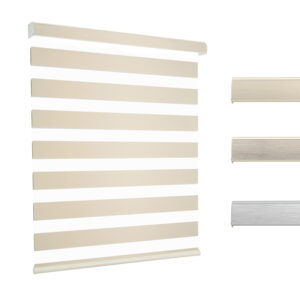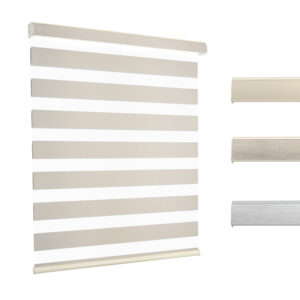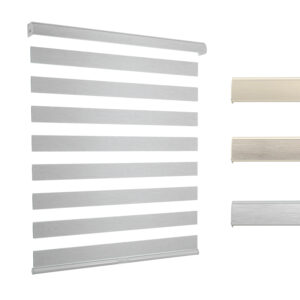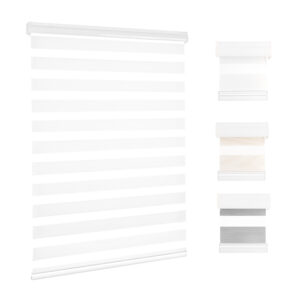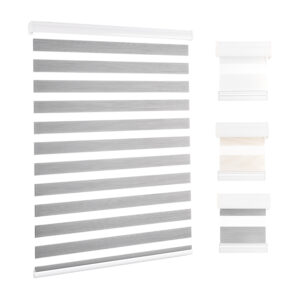
At Sunjoy Shades (Shaoxing Sunjoy Group Co., Ltd., sunjoyshades.com), we manufacture cordless honeycomb blinds at our Shaoxing factory. This child-safe guide explains what wholesale buyers need to know — from cordless lift systems to fabric and opacity options.
If you sell window coverings in the United States or Canada, two words decide a growing share of your sales: cordless and cellular. Cordless, because safety expectations (and federal rules) have effectively made cord-free operation the default for residential window coverings. Cellular — better known as honeycomb blinds — because their signature air-pocket construction makes them the most energy-efficient shade style you can stock, right as energy costs keep rising.
This guide covers why cordless honeycomb blinds deserve a core slot in your wholesale lineup, how to choose between the options, and what to verify with your supplier before ordering.
Why Cordless Is Non-Negotiable in the North American Market
Let’s be direct: if you are still leading with corded products for the US residential market, you are selling yesterday’s product. U.S. safety standards have effectively made cordless — or inaccessible-cord — designs the default for residential window coverings, driven by the strangulation hazard that cords pose to young children and pets.
What this means for wholesalers and dealers in practice:
- Cordless is the expectation, not the upgrade. Most residential customers now assume a new blind will be cordless. Quoting corded as standard creates friction and, in some channels, compliance risk.
- It is your easiest safety story. “No cords, nothing for little hands or paws to get tangled in” — one sentence that answers the question every parent asks.
- Retailers and big-box channels require it. If you supply stores or online sellers, cordless operation is typically a listing requirement, not a nice-to-have.
Cordless honeycomb blinds operate with a simple push-up / pull-down motion on the bottom rail (or a cordless wand on some designs). No cords, no loops, nothing hanging.
How Honeycomb (Cellular) Shades Work — and Why They Save Energy
The “honeycomb” name describes the cross-section: the fabric forms hexagonal air pockets — cells — that run horizontally across the shade. Those trapped air pockets are the whole point. Still air is a poor conductor of heat, so the cellular structure creates an insulating barrier at the window — the largest source of heat gain and heat loss in most homes.
For your sales story, keep it tangible for customers:
- In summer, the shade blocks solar heat at the glass before it radiates into the room, easing the load on air conditioning.
- In winter, the air pockets slow heat escaping through the glass, keeping rooms warmer near windows.
- Double-cell fabrics (two layers of honeycomb) insulate more than single-cell — a natural good/better story for your lineup.
Energy-efficient cellular shades are widely flagged as one of the strongest product trends in window coverings right now. Stocking them positions you ahead of the demand curve, not behind it.
Cordless Lift Systems: Know Your Options
“Cordless” covers several operating systems. Make sure your supplier offers the ones your customers want:
- Cordless push-up / pull-down — the standard. Push the bottom rail up to raise, pull down to lower. Simple, reliable, and the lowest cost. The workhorse of the category.
- Top-down / bottom-up — the shade can lower from the top as well as raise from the bottom. Customers love it for street-facing windows: daylight from the top, privacy at the bottom. This is a premium feature worth stocking — it consistently earns its price premium.
- Cordless with wand — a slim wand tilts or operates the shade; a good middle ground for customers who find push-pull awkward on very tall shades.
- Motorized upgrade — battery-powered motors with remote or app control. The luxury tier: all the benefits of cordless plus smart-home integration. (See our guide to motorized options for the full breakdown.)
For most dealers, the right stocking mix is: cordless push-up/pull-down as the standard, top-down/bottom-up as the upsell, motorized as the premium tier.
Single Cell vs. Double Cell: Which Should You Stock?
| Single Cell | Double Cell | |
|---|---|---|
| Structure | One layer of honeycomb pockets | Two layers of pockets |
| Insulation | Good | Better |
| Light options | Light-filtering and blackout | Light-filtering and blackout |
| Stack height (when raised) | Slimmer | Slightly deeper |
| Typical price | Lower | Higher |
| Best pitch | “Energy-smart at a great price” | “Maximum insulation for extreme climates” |
Stocking advice: carry both, and let climate do the selling. In hot southern states and cold northern regions, double cell sells on the energy story. Everywhere else, single cell wins on price. Offer both in light-filtering and blackout fabrics and you cover nearly every residential need.
Light-Filtering vs. Blackout Honeycomb Fabrics
- Light-filtering — softens daylight while maintaining privacy. The default choice for living areas, kitchens, and offices. In cellular shades it still delivers the insulation benefit.
- Blackout — blocks light for bedrooms, media rooms, and nurseries. Blackout honeycomb typically uses a foil-lined or metallized inner layer within the cell — which, as a bonus, boosts the insulation performance further.
A common dealer mistake is stocking only light-filtering. Bedrooms are where customers feel the strongest pain (streetlights, early sunrise), and blackout cellular shades command a better price. Stock both.
What to Verify With Your Wholesale Supplier
Honeycomb blinds have more engineering in them than they appear. Before placing a wholesale order, confirm:
- Cell size — the two standard cell sizes are 3/8-inch and 3/4-inch. Smaller cells suit shallow window frames and smaller windows; larger cells suit big windows and give a bolder look. Confirm both are available.
- Cordless mechanism quality — the lift system is the most-used part of the shade. Ask about the mechanism’s cycle testing and warranty. A cordless shade that won’t stay in position is a return waiting to happen.
- Fabric range — count the colorways, not just the fabrics. North American buyers want whites, off-whites, grays, and a few warm neutrals. Ask for physical swatch books.
- Blackout performance — if you stock blackout, verify it in person. True blackout should block light fully when closed; check the side light gaps too, and ask about side channels if your customers demand near-total darkness.
- MOQ and lead time — confirm the MOQ structure (per SKU, per color, or per order) and standard production lead time from order confirmation. Made-to-measure is the norm; confirm there are no restrictive standard-size-only policies.
- Packaging — cellular shades crush easily. Confirm the factory’s packaging protects the cell structure in transit, especially for long ocean freight.
Positioning Cellular Shades in Your Catalog
The winning pitch is not “honeycomb blinds” — it is the story:
- To parents: “Completely cordless — safe for kids and pets.”
- To energy-conscious buyers: “The insulating air-pocket design helps keep rooms cooler in summer and warmer in winter.”
- To bedroom buyers: “Available in blackout, with top-down/bottom-up so you get morning light without giving up privacy.”
- To landlords and property managers: “Durable, cordless, and easy to operate — fewer service calls.”
And the ladder for your lineup: roller shades (entry) → zebra blinds (style) → cellular shades (comfort + efficiency story) → motorized anything (luxury). Cellular shades earn their place as the “smart comfort” step.
Frequently Asked Questions
Are cordless honeycomb blinds really safer for children?
Yes. Cordless operation removes the cord loops that pose a strangulation hazard to young children and pets — the reason U.S. safety standards have effectively made cordless the default for residential window coverings. There is simply nothing to get tangled in.
What is the typical MOQ for wholesale cordless honeycomb blinds?
It varies by supplier and is typically structured per SKU, per color, or per order. Ask your supplier for their exact MOQ tiers and whether mixed colors or sizes can combine toward the minimum.
What is the difference between single-cell and double-cell honeycomb?
Single-cell shades have one layer of air pockets; double-cell have two. Double-cell insulates better and costs more. Both come in light-filtering and blackout fabrics. Stock single-cell for price-sensitive buyers and double-cell where energy performance sells — hot climates, cold climates, and eco-conscious customers.
Can honeycomb blinds be motorized?
Yes. Battery-powered motorization with remote or app control is available on most honeycomb lines and is a strong premium upsell — especially for tall windows and skylights.
Do cellular shades really help with insulation in both summer and winter?
The honeycomb air pockets create an insulating barrier at the window in both directions: they slow heat entering in summer and heat escaping in winter. Double-cell and blackout (foil-lined) fabrics perform best. Position them as the most energy-efficient shade style in your lineup.
What sizes are available?
Cordless honeycomb blinds are normally made to measure. Confirm the minimum and maximum widths and drops with your supplier, the available cell sizes (typically 3/8″ and 3/4″), and how very wide windows are handled.
Get a Free Wholesale Quote
Looking for a cordless honeycomb blinds wholesale supplier? Sunjoy Shades has manufactured window blinds in Shaoxing, China since 2009, supplying wholesalers, dealers, and project buyers — with cordless and motorized options across roller, zebra, honeycomb, and shangri-la lines.
[Get a Free Wholesale Quote] · WhatsApp: +86 18706580010 (https://wa.me/8618706580010) · [Download Our 2026 Catalog]
Looking for more cordless options? Explore our blackout roller shades and motorized zebra blinds.
About Sunjoy Shades — Sunjoy Shades (Shaoxing Sunjoy Group Co., Ltd.) has manufactured window blinds in Shaoxing, China since 2009. Browse the full range at https://www.sunjoyshades.com, get a free wholesale quote, or reach us on WhatsApp: +86 18706580010 (https://wa.me/8618706580010).