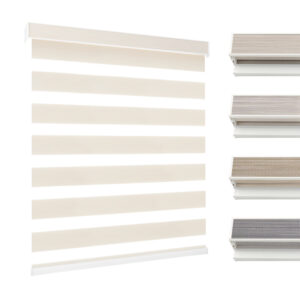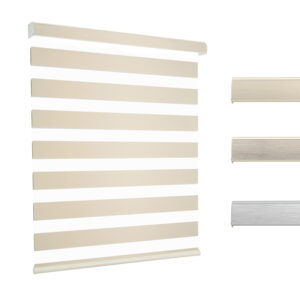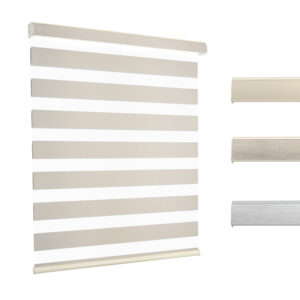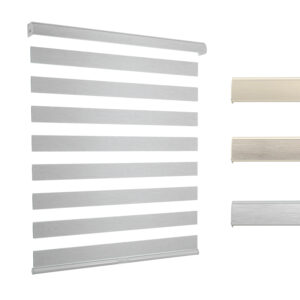
Hotel guests remember two things about their room: the bed and the darkness. A guest who gets woken up at 6 a.m. by sunlight leaking through cheap blinds will leave it in the review — and reviews drive bookings. That’s why blackout roller shades have become standard specification in mid-range and upscale hotel projects worldwide.
If you’re sourcing window coverings for a hotel — whether you’re a procurement manager, a contractor, or a wholesaler supplying the hospitality sector — this guide walks through what actually matters when choosing blackout roller shades, and what to ask your manufacturer before placing an order.
At Sunjoy Shades (Shaoxing Sunjoy Group Co., Ltd., sunjoyshades.com), we manufacture blackout roller shades in our Shaoxing factory for hotel projects worldwide — so this buyer’s guide comes straight from the production floor.
1. True Blackout vs. “Room Darkening”: Know the Difference
Not every shade marketed as “blackout” truly blocks light. Here’s the breakdown:
- Blackout (0% openness): Coated or triple-weave fabrics that block essentially all incoming light. This is what hotel guest rooms need.
- Room darkening / dim-out (1–3% openness): Significantly reduces light but a glow remains. Fine for corridors or lobbies, not for bedrooms.
- Light filtering (5–10% openness): For public areas where daylight is welcome.
Hotels that need both darkness and insulation often specify blackout honeycomb blinds alongside roller shades — the cellular structure traps air and adds an extra layer of thermal comfort for guest rooms.
What to ask your supplier: Request the fabric’s openness factor in writing, and ask for a physical sample you can hold up to a window. A reputable manufacturer will provide fabric swatch books free of charge.
2. The Light Gap Problem (and How Hotels Solve It)
Even with true blackout fabric, light leaks around the edges of the shade — the “light gap.” In hotel projects, this is typically solved with:
- Side channels / cassette systems: Aluminum side channels plus a fascia cassette at the top trap light at the edges. This is the standard for guest rooms in 4-star and 5-star properties.
- Wider-than-window mounting: Outside-mount shades made 5–10 cm wider than the frame on each side.
- Layering: A sheer roller shade behind the blackout shade gives guests daytime privacy with soft light, and full darkness at night. This dual-shade setup is increasingly popular in new builds.
If your project targets the upscale segment, specify side channels in your RFQ — not every factory offers them as standard.
3. Fire Ratings: A Non-Negotiable for Commercial Projects
Hotels are commercial buildings, and most jurisdictions require window coverings to meet flame-retardant standards. Common requirements include:
- Europe: EN 13773 / DIN 4102-B1
- US: NFPA 701
- General: Fabrics labeled “FR” (flame retardant) or “inherently FR”
What to ask your supplier: “Can you provide test reports for the flame-retardant rating on this fabric?” If a factory can’t produce documentation, move on — this is a compliance risk you don’t want on a hotel project.
4. Motorized vs. Manual: When It Pays Off
Manual chain-operated blackout shades are cost-effective and perfectly fine for most guest rooms. Consider motorization for:
- Suites and villas where the experience justifies the cost
- Tall or hard-to-reach windows in lobbies and atriums
- Smart hotel concepts integrating shades with room control systems (many motors now support Tuya, Zigbee, or dry-contact integration)
Motorized shades typically add 40–80% to the unit cost but reduce guest complaints about tangled chains — and cordless/motorized options eliminate the child-safety concerns associated with looped cords entirely. See Sunjoy’s motorized blackout blinds for a typical smart-hotel-ready option.
5. Measuring and Specifying for a Hotel Project
For project orders, accuracy at the specification stage saves enormous rework later:
- Confirm mount type per window: inside mount (within the frame) vs. outside mount — hotels usually mix both.
- Standardize sizes: Group windows into size brackets to simplify manufacturing and reduce cost. A 200-room hotel rarely needs 200 unique sizes.
- Decide control side and chain length for manual shades (chain length is a safety consideration in family rooms).
- Request a pre-production sample in the exact fabric, size, and control configuration before bulk manufacturing begins.
An experienced manufacturer should offer a measurement template and review your window schedule for errors before production — ask whether this service is included. At our Shaoxing factory, Sunjoy Shades reviews every project window schedule with the buyer before bulk manufacturing begins.
6. MOQ, Lead Times, and OEM: The Commercial Questions
These are the questions that separate a smooth project from a painful one:
- What is the MOQ per SKU / per color? (For reference, established factories typically start at 100–300 pcs per SKU for custom fabrics.)
- What is the production lead time? Standard is 15–25 days after sample approval; confirm whether that includes or excludes shipping.
- Can you do private label / OEM packaging? Hotel chains and wholesalers usually require neutral or branded packaging.
- What is your defect and remake policy? Get it in writing — for a 500-room order, even a 2% defect rate means 10 rooms to fix.
7. Cost Factors: Where the Money Goes
Understanding cost drivers helps you compare quotes fairly:
| Cost driver | Impact |
|---|---|
| Fabric (blackout coating, FR treatment) | High — the biggest variable |
| Motorization | +40–80% vs. manual |
| Side channels / cassette | +15–25% |
| Custom sizes vs. standardized | Custom adds 10–20% |
| Order volume | 500+ pcs unlocks better tiers |
If one quote is dramatically lower than others, check what’s missing: often it’s the FR certification, the side channels, or the after-sales terms.
FAQ
How dark should hotel blackout shades be?
Guest rooms should use true blackout fabrics (0% openness) combined with side channels or outside mounting to eliminate edge light leakage.
Are blackout roller shades required to be flame retardant in hotels?
In most markets, yes — commercial buildings must meet local fire codes (e.g., EN 13773 in Europe, NFPA 701 in the US). Always request test reports.
What is the typical lead time for 500 hotel room shades?
15–25 days production after sample approval is standard for an experienced factory, plus shipping time. Confirm the schedule in writing before signing.
Can I get samples before placing a bulk order?
Any serious manufacturer offers fabric swatches and made-to-size pre-production samples. If a supplier refuses, consider it a red flag.
Manual or motorized for hotel guest rooms?
Manual chain shades are the cost-effective standard for guest rooms; reserve motorization for suites, villas, and tall public-area windows.
Planning a hotel window-covering project? [Get a Free Quote] — Send us your window schedule and we’ll return a detailed quotation, including fabric samples.
Or [Download Our 2026 Catalog] for the full blackout and FR fabric range.
About Sunjoy Shades — Shaoxing Sunjoy Group Co., Ltd. has manufactured window blinds in Shaoxing, China since 2009. Browse the full range at https://www.sunjoyshades.com, get a free wholesale quote, or reach us on WhatsApp: +86 18706580010 (https://wa.me/8618706580010).