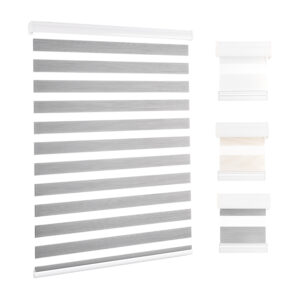
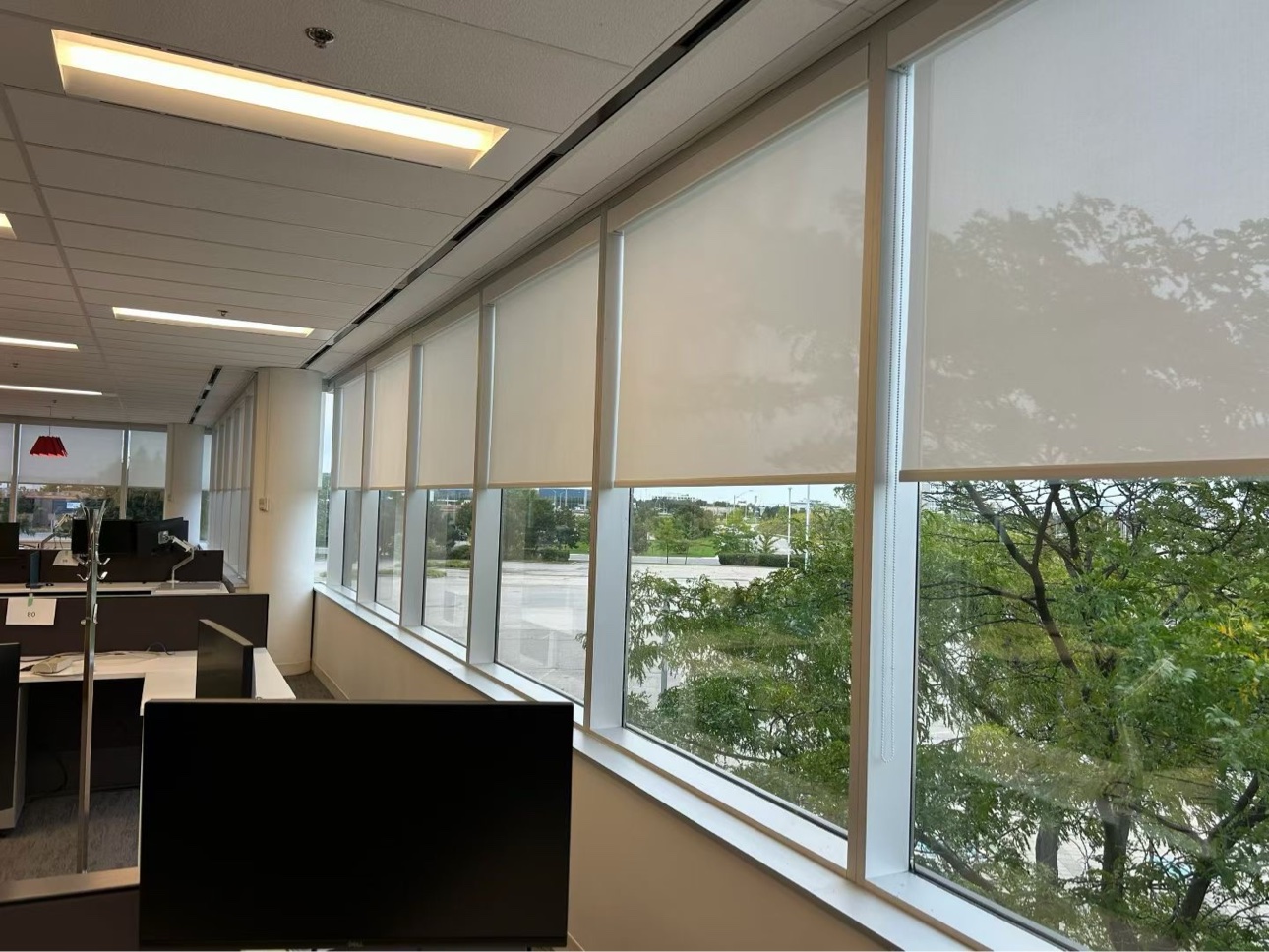
Top Down Bottom Up Cellular Shades Supplier Guide
If you sell window coverings in the United States or Canada, you have probably had this conversation: a customer walks in, points at the street-facing windows in their living room, and asks for a shade that gives them daylight from the top and privacy at the bottom. That is the top down bottom up (TDBU) cellular shade — and it is one of the highest-margin products a dealer or wholesaler can stock.
The pain point for buyers like you is not demand. It is supply. Top down bottom up cellular shades are harder to manufacture than standard bottom-up shades: two moving rails, two cord paths, tighter alignment tolerances. A supplier that cuts corners delivers shades with sagging cells, uneven rails, or color drift between production batches — and the complaints land on your desk, not the factory’s. This guide explains what the product is, which specs actually matter, and how to evaluate a supplier before you place a wholesale order.
What Top Down Bottom Up Cellular Shades Are — and Why Your Customers Keep Asking for Them
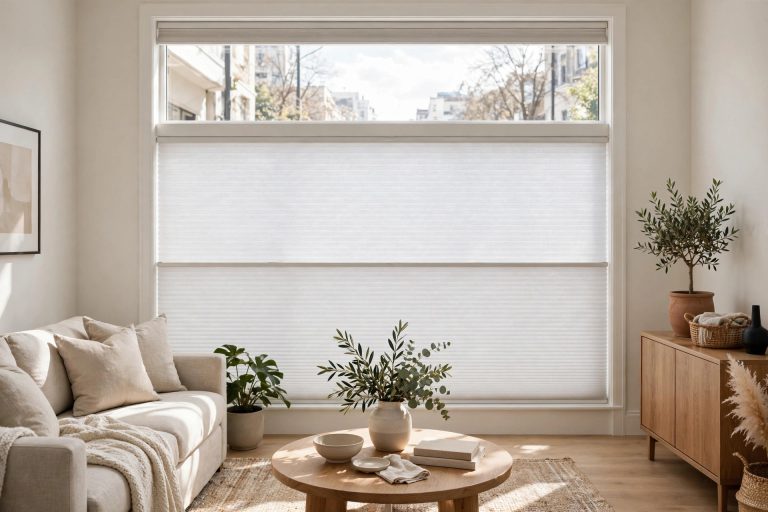
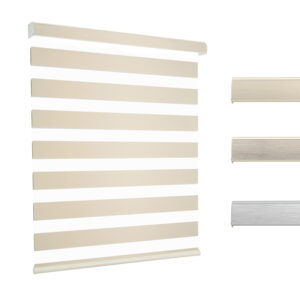
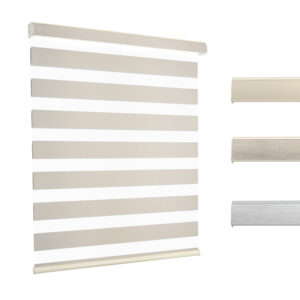
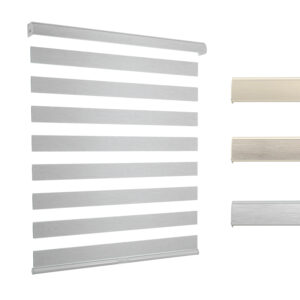
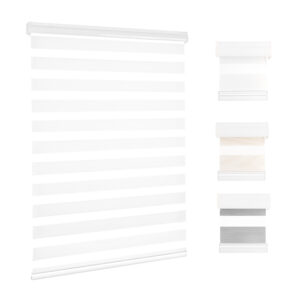
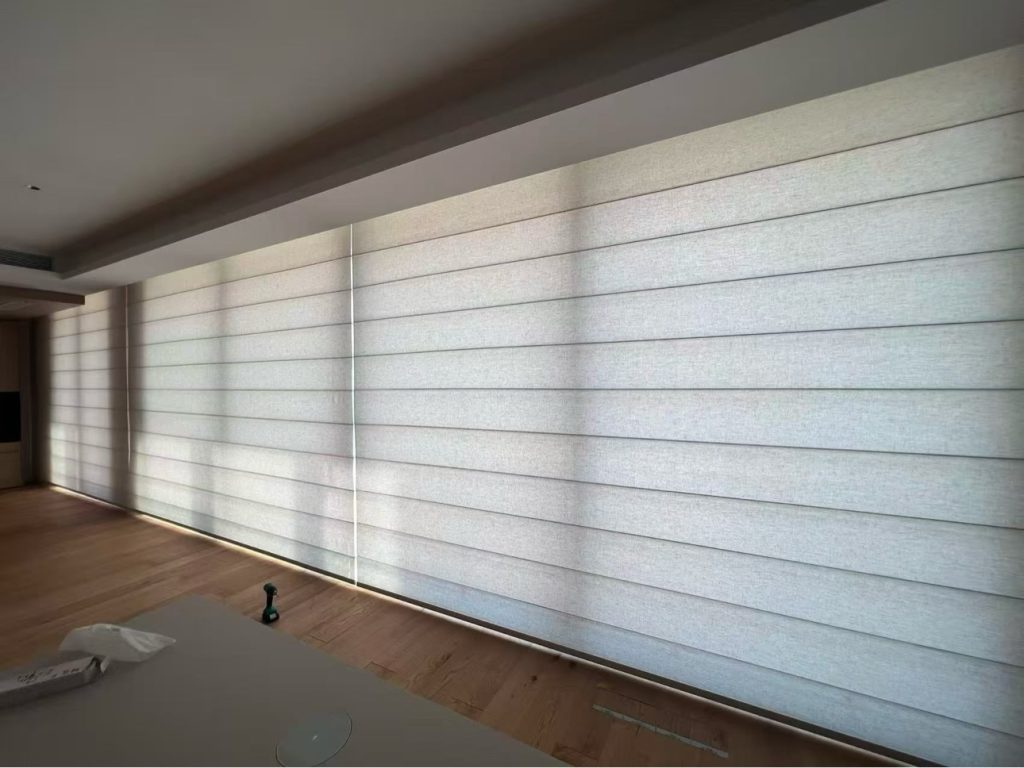
A top down bottom up cellular shade does exactly what the name says: the shade can be lowered from the top as well as raised from the bottom. A middle rail and a bottom rail move independently along the cord paths, so the customer can position the fabric anywhere in between — open at the top for daylight while the bottom half stays covered for privacy, or fully lowered for complete coverage. (See our day and night cellular shades collection for the current range.)
The cellular (honeycomb) construction adds the second selling point. The fabric forms hexagonal air pockets that trap air at the window, which makes cellular shades the most energy-efficient shade style you can offer — a strong story as energy costs stay high across North America. Combine that insulation with the top-down bottom-up light control, and you get a product that customers ask for by name.
Where do your customers want them most? Street-facing windows in living rooms and front bedrooms, home offices where glare hits the screen but the room still needs light, and children’s bedrooms where parents want morning light without giving up privacy. Designers specify TDBU cellular shades for these scenarios because no other shade style solves the same problem as elegantly. For wholesalers, that translates into a premium upsell over standard cordless cellular shades — the TDBU option consistently earns its price premium in dealer showrooms.
The Specs That Separate a Reliable Supplier From a Risky One
When you compare quotes from a top down bottom up cellular shades supplier, most buyers look at price first and regret it later. The quality gaps that create customer complaints live in the specs. Ask about these five before you compare numbers:
1. Cell size — 3/8″ vs. 3/4″. The 3/8″ single cell is the standard for most residential windows: compact stack, clean look, good insulation. The 3/4″ cell suits larger windows and gives a bolder honeycomb profile, with slightly better insulating performance. A serious supplier offers both and can explain which suits your customers’ window sizes.
2. Single cell vs. double cell. Double-cell fabric (two layers of honeycomb) insulates more than single-cell and hides cord holes better, which matters on wide shades viewed from outside at night. It is also the natural good/better story for your lineup: single cell for budget-conscious projects, double cell as the premium pick.
3. Fabric opacity. Stock these three tiers: light-filtering (soft daylight, daytime privacy), room-darkening/semi-blackout (bedrooms, media rooms), and full blackout (double-cell blackout fabrics for shift workers and nurseries). Make sure your supplier’s “blackout” cellular fabric is genuinely opaque — hold a sample to a strong light and check the cell interiors, not just the face fabric.
4. Cord-path alignment. This is the TDBU-specific failure point. The shade has two independent rails traveling on separate cord paths. If the factory’s drilling and cord routing are sloppy, the middle rail drifts, tilts, or catches. Ask the supplier how they control rail alignment during assembly, and request a wide sample (at least 48 inches) so you can see whether the rails stay level across the full width.
5. Flame-retardant options. For hotel, office, and public-building projects, ask about NFPA 701 rated fabrics. Commercial buyers in the US often require flame-retardant documentation, and a supplier that stocks FR cellular fabrics — or can source them with test reports — opens a project channel that pure-residential competitors cannot touch.
Operating Systems: Corded TDBU, Cordless TDBU, and Motorized
“Top down bottom up” describes how the shade moves; the lift system describes how the customer moves it. Your supplier should offer the right mix for the North American market:
- Corded TDBU uses two sets of cords — one set operates the middle rail, the other the bottom rail. It is the most economical option and still common in commercial projects, but for US residential sales, cords are a declining category (see the safety section below).
- Cordless TDBU is the sweet spot for residential dealers. The customer pushes the middle rail and bottom rail by hand; spring-balanced mechanisms hold each rail in place. No cords, nothing hanging, and the cleanest look in a showroom. This is the configuration most of your retail customers will want.
- Motorized TDBU is the premium tier: a rechargeable battery motor drives the shade, controlled by remote or app, with some systems offering smart-home integration (Tuya/WiFi options are typical). Motorized day and night cellular shades are ideal for tall windows, skylights, and hard-to-reach installations — and they carry the best margins in the category.
For most dealers, the right stocking mix is cordless TDBU as the standard, motorized TDBU as the premium upsell, and corded TDBU only where a commercial project specifies it.
Child Safety and Compliance: What Your Supplier Must Get Right
North American buyers treat window-covering safety as a purchase criterion, not a footnote. The US window-covering industry standard (WCMA/ANSI A100.1) effectively makes cordless — or inaccessible-cord — designs the default for residential products, driven by the strangulation hazard that cords pose to young children and pets. In practice, most US residential customers now expect a new shade to be cordless, and retailers increasingly require it as a listing condition.
What this means when you vet a supplier:
- Confirm that their cordless TDBU mechanism is genuinely cord-free at the front — no exposed loops, no dangling cords.
- If you stock any corded TDBU for commercial jobs, make sure the supplier provides the required cord cleats/tension devices and clear installation instructions.
- Ask whether the supplier can provide test documentation for the lift systems they sell. A factory that has done the compliance homework will answer this question without hesitation; one that has not will change the subject.
Getting this right protects your business as much as your customers. A single safety complaint costs far more than the margin difference between a compliant supplier and a cheap one.
How to Vet a Top Down Bottom Up Cellular Shades Supplier
Price quotes are easy to compare; factories are not. Use this checklist on your first serious conversation with any supplier:
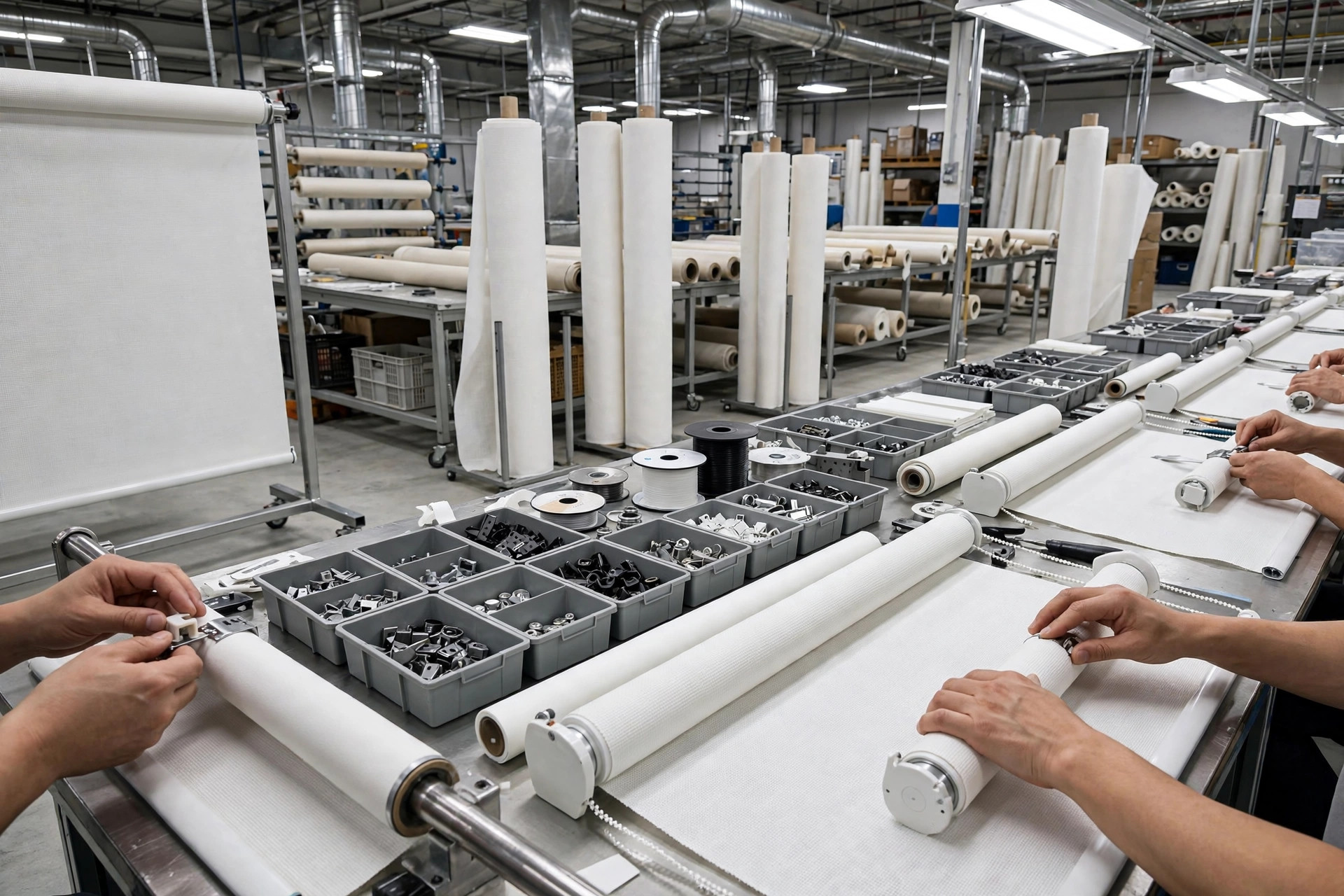
1. Factory-direct or trading company? A manufacturer that pleats its own cellular fabric and assembles shades in-house controls quality and lead time. Trading companies add a markup and a communication layer — fine for small mixed orders, risky for a core product line. Ask for factory photos or a video walkthrough of the pleating and assembly lines.
2. Fabric range and stock program. How many colors and opacities are stocked vs. made-to-order? A stocked fabric program means faster lead times and lower MOQs; custom-dyed fabrics mean longer waits and stricter minimums. For TDBU, also confirm the supplier stocks the double-rail components (middle rails, cord locks, brackets) — not every cellular-shade factory is set up for top-down bottom-up assembly.
3. Custom sizes. North American windows are not one-size-fits-all. Confirm the supplier does made-to-measure (width and drop to the inch or centimeter), the maximum width they can produce without visible seams, and how they handle out-of-square windows in their measuring guide.
4. Samples and swatch books. Professional factories provide fabric swatch books and made-to-size pre-production samples so you can confirm quality before committing to a wholesale order. Be wary of any supplier that will only sell you a finished shade at retail price as a “sample.”
5. OEM and private label. If you sell under your own brand, ask about private-label packaging, custom hang tags, and unbranded installation instructions. Sunjoy Shades (Shaoxing Sunjoy Group Co., Ltd., sunjoyshades.com) supports OEM/private-label orders for dealers and importers who want the product to carry their brand, not the factory’s.
6. Quality control you can verify. Ask what the factory inspects before shipment: rail alignment across the full width, cord tension consistency, color matching against the approved swatch, and packaging that protects the rails in transit. Better yet, ask whether they accept third-party inspection — a confident “yes” tells you everything.
MOQ, Lead Time, and Pricing: What to Expect
No factory publishes a universal price list, and you should distrust any “supplier” that does without asking about your specs. But these are the typical structures North American buyers encounter:
- MOQ: Top down bottom up cellular shades typically carry a minimum of 200–500 sets per order, depending on the factory and fabric. More complex than standard cellular shades (two rails, more components), so expect the floor to sit slightly higher than basic cordless cellular. Always clarify whether the MOQ is per order, per SKU, or per color — a “lower” per-color MOQ can be harder to meet than a “higher” per-order one.
- Lead time: A standard wholesale order typically ships 15–25 days after sample approval, assuming stocked fabrics. Custom colors, FR fabrics with fresh test reports, or motorized versions can add time. Ask for the lead time in writing with your quote.
- Pricing tiers: Most manufacturers price in volume brackets, so consolidating SKUs to reach the next tier often lowers your per-unit cost more than aggressive haggling on a single line item. Get the tier table, not just a single number.
- Freight reality: Cellular shades ship compactly compared to assembled blinds, which helps your landed cost — but confirm whether the quote is EXW, FOB, or DDP, and who handles the customs paperwork for your port.
The bottom line: the cheapest quote usually hides the most expensive surprises — rework, returns, and customers who do not come back. Evaluate the supplier’s specs, samples, and systems first; negotiate price second. A dependable Sunjoy Shades partnership is worth more than a few cents saved per unit on a product your customers will live with for a decade.
Frequently Asked Questions
Can top down bottom up cellular shades be motorized?
Yes. Motorized TDBU cellular shades use a rechargeable battery motor (remote or app controlled) to drive the rails. They are the premium option for tall windows and hard-to-reach installations. Ask your supplier about battery life per charge, remote channel capacity, and whether smart-home integration (WiFi/app) is available.
Are top down bottom up cellular shades child-safe?
The cordless and motorized versions are — there are no accessible cords. Corded TDBU versions should only be used where cords can be kept out of reach of children and pets, and must ship with the required cord-management devices. For US residential sales, lead with cordless.
Single cell or double cell — which should I stock?
Stock both. Single cell (typically 3/8″) covers most residential windows at a competitive price; double cell is your premium and blackout option with better insulation and cleaner light blocking. The good/better story practically sells itself in a showroom.
What sizes can a supplier make?
A capable factory produces made-to-measure shades to your exact width and drop. Confirm the maximum single-unit width (wider windows may need two shades), the smallest workable width for TDBU mechanisms, and whether they provide a measuring guide your sales team can hand to customers.
What is the typical MOQ and lead time for wholesale TDBU cellular shades?
Typically 200–500 sets per order and 15–25 days production after sample approval, using stocked fabrics. Custom colors, flame-retardant fabrics, or motorized versions may extend both. Always get the MOQ structure (per order vs. per SKU vs. per color) and the lead time in writing.
Get a Free Wholesale Quote
Ready to add top down bottom up cellular shades to your lineup? Send us your sizes, quantities, and fabric preferences — we will reply with specs, tiered pricing, and a production timeline.
- Get a Free Wholesale Quote — email us your project details
- WhatsApp: +86 18706580010 (fastest response)
- Download Our 2026 Catalog — full product range with specs and fabric options
Free samples and fabric swatch books are available for qualified wholesale buyers.
About Sunjoy Shades
Sunjoy Shades (Shaoxing Sunjoy Group Co., Ltd., sunjoyshades.com) has manufactured window blinds in Shaoxing, China since 2009. Our product range covers roller blinds/shades, zebra (day and night) blinds, honeycomb/cellular shades, shangri-la blinds, and dream blinds — in manual, cordless, and motorized versions, with OEM/private-label programs for dealers, wholesalers, and project buyers. Website: https://www.sunjoyshades.com · WhatsApp: +86 18706580010.