If you wholesale, distribute, or specify window coverings in North America, you have faced this question from a buyer — or asked it yourself: zebra blinds vs roller blinds, which should I stock, sell, or specify? Pick the wrong product mix and you sit on slow-moving inventory. Pick the right one and you match what designers, contractors, and project buyers are actually asking for in 2026.
Both products roll on the same basic mechanism, both come in manual, cordless, and motorized versions, and both can be made to measure. But they serve different customers, carry different margins, and win in different projects. This guide breaks down the comparison from a wholesale buyer’s perspective: cost structure, MOQ and SKU complexity, light control, target markets, and the specs your customers will ask about — so you can order with confidence.
At Sunjoy Shades (Shaoxing Sunjoy Group Co., Ltd., sunjoyshades.com), we manufacture zebra blinds and roller shades at our Shaoxing factory — here is how the two compare for wholesale buyers.
What Each Product Actually Is
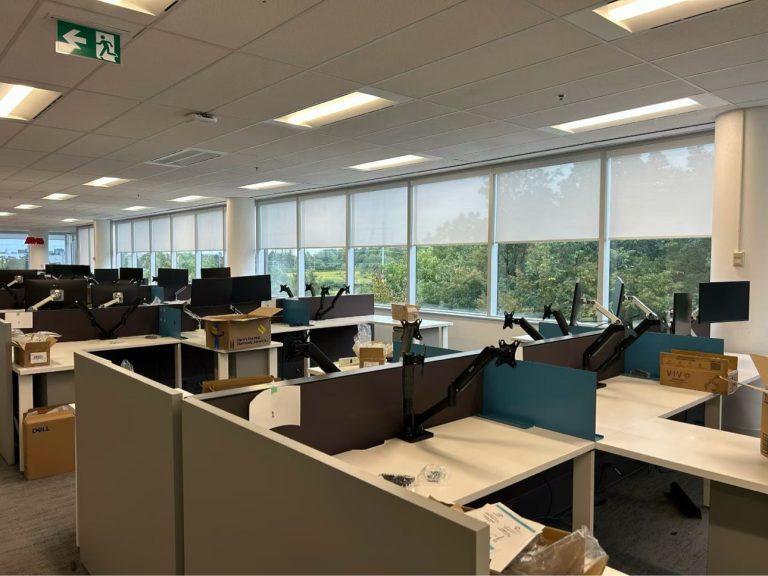
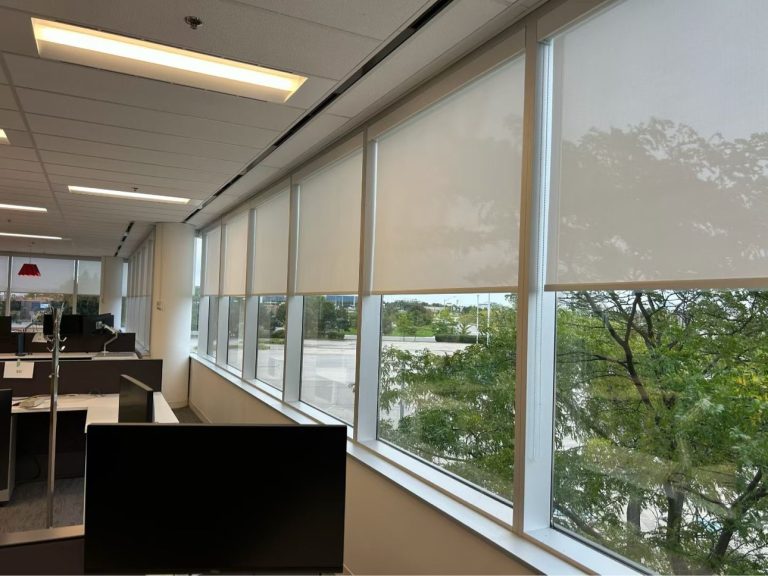
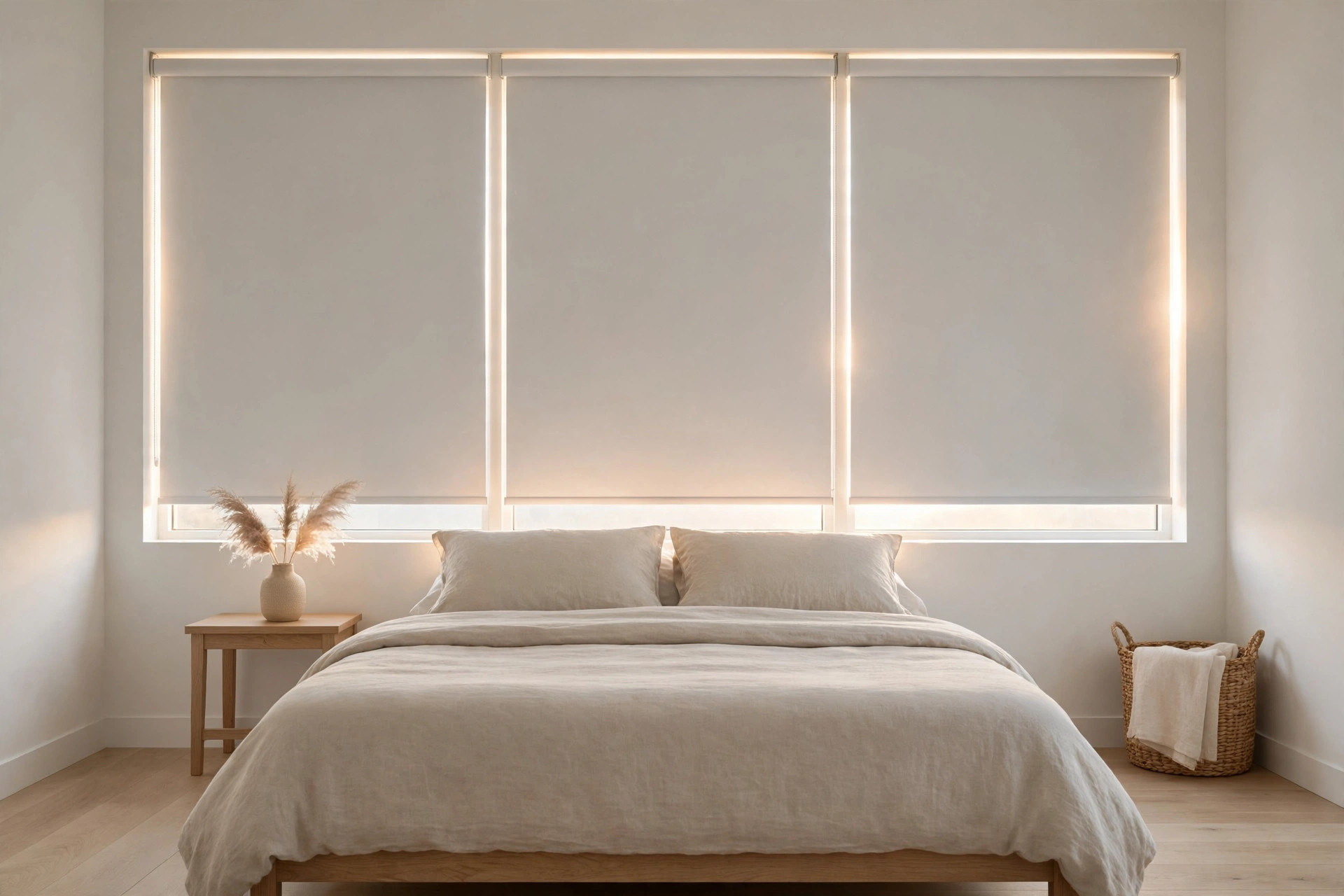
Roller blinds (roller shades) are the simplest window covering in the industry: a single panel of fabric that rolls up onto a tube and unrolls to cover the window. Opacity is set by the fabric you choose — sheer, light-filtering, sunscreen (standard openness levels such as 1%, 3%, 5%, or 10%), or blackout. The hardware is minimal: tube, brackets, bottom bar, and a control (chain, cordless spring, or motor).
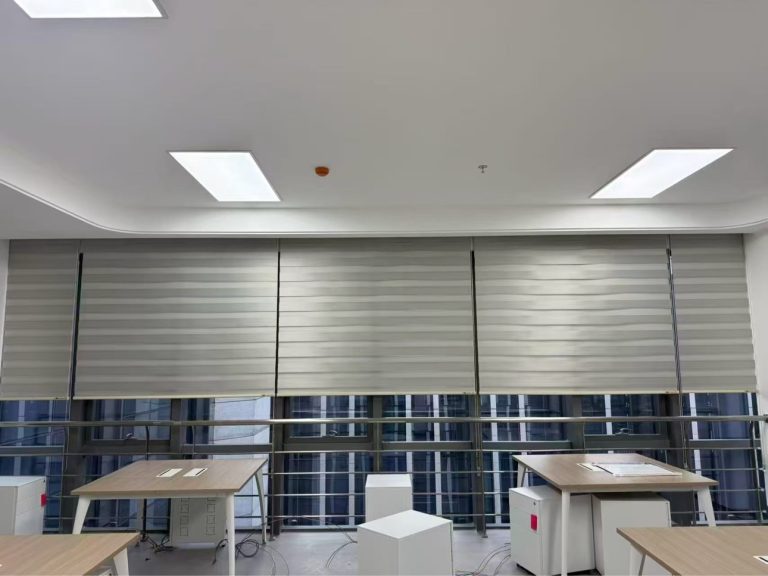
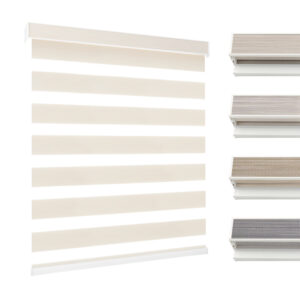
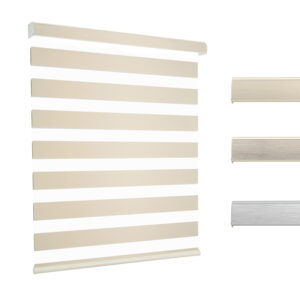
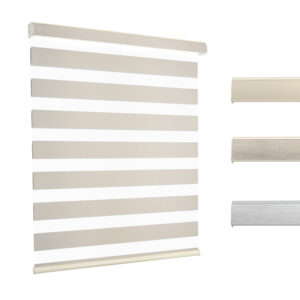
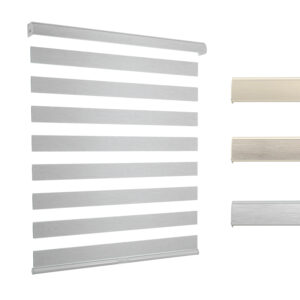
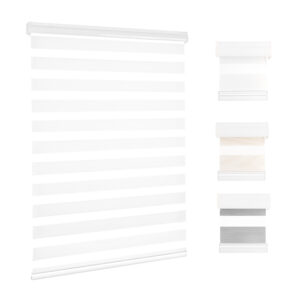
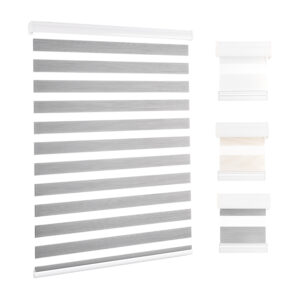
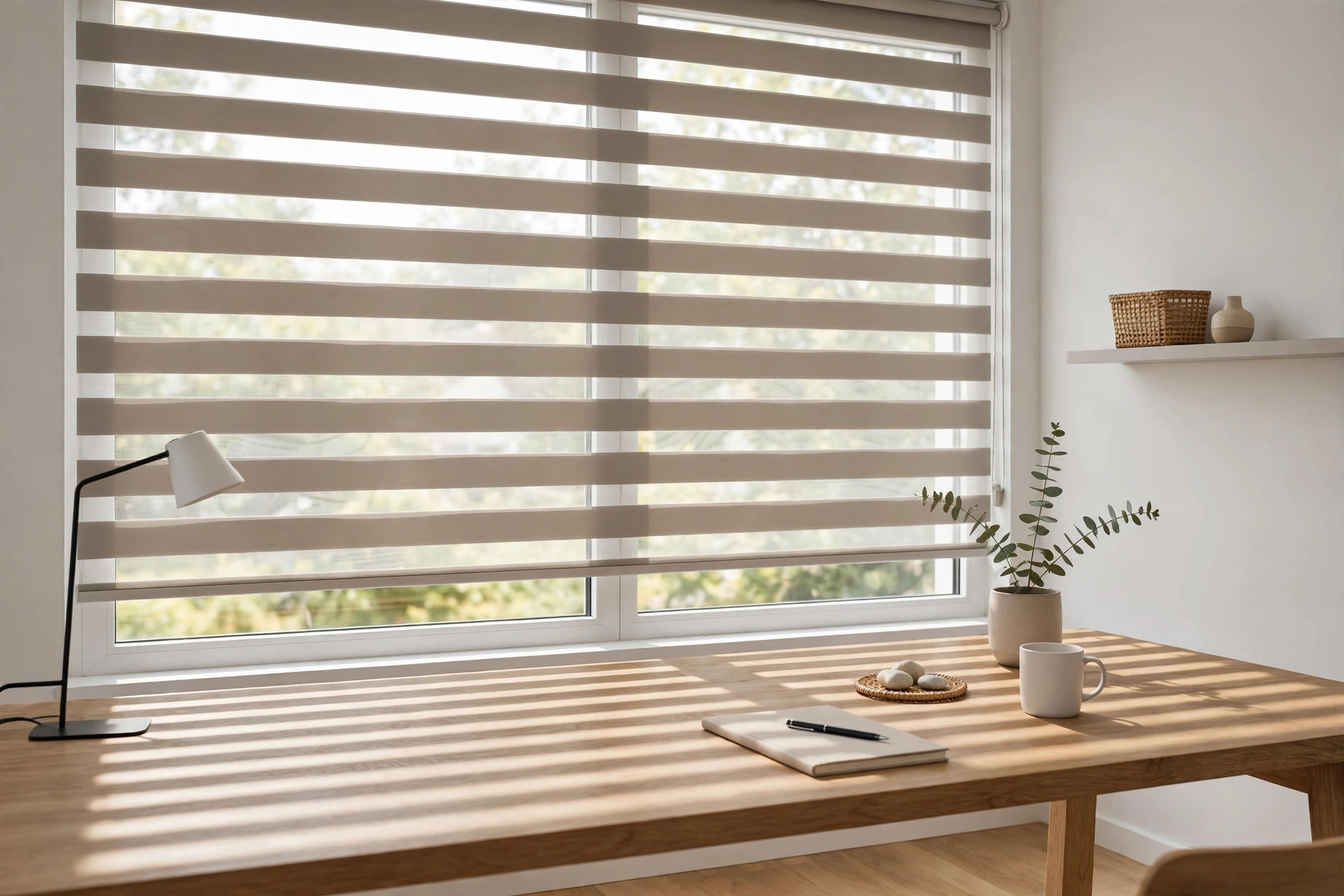
Zebra blinds — also sold as day and night blinds or dual layer blinds on B2B platforms — use two layers of horizontally striped fabric: alternating bands of sheer and solid (dim-out or blackout) material. Sliding the layers past each other switches the blind between three states: open view through the sheer bands, diffused light, and near-total privacy when the solid bands align. It is essentially a roller shade with a built-in light-control system, and it reads as a more premium, design-forward product.
The manufacturing difference matters for buyers: zebra blinds need striped dual-layer fabric, precise band alignment, and a double-layer mechanism — more components, more QC checkpoints, and typically a higher unit cost than a basic roller shade.
Head-to-Head: The 8 Factors That Matter to a Wholesaler
| Factor | Roller Blinds / Shades | Zebra Blinds |
|---|---|---|
| Light control | Fixed by fabric choice; open or closed | Adjustable sheer-to-private in one product |
| Privacy | Blackout fabrics give full privacy; sheers give none | Solid-band alignment gives privacy without losing all light |
| Typical price position | Entry to mid-range; the volume product | Mid to premium; higher ticket per unit |
| Fabric and SKU complexity | Many fabric options, simple construction | Fewer fabric families, more mechanism SKUs |
| Installation | Simplest in the industry; contractor-friendly | Slightly more involved; band alignment matters |
| Replacement parts | Tubes, fabrics, bottom bars widely interchangeable | More proprietary parts; confirm parts supply |
| Best retail buyer | Price-sensitive homeowners, rentals, offices | Design-conscious buyers, living rooms, showrooms |
| Best project buyer | Hotels (blackout), offices, schools | Boutique hotels, high-end residential, designer jobs |
Neither product “wins” outright — they win in different carts. Roller shades are your volume engine; zebra blinds are your margin engine.
Cost Structure: What Drives Your Landed Cost
As a buyer, compare these cost drivers line by line when you request quotes:
- Fabric grade. For roller shades, the fabric is the product — blackout coatings, sunscreen weaves, and textured fabrics each step the price up. For zebra blinds, you are also paying for the dual-layer striped weave, which costs more to produce than a single plain fabric.
- Mechanism. A standard chain-drive roller is the cheapest operating system in window coverings. Zebra mechanisms add a second fabric layer path and alignment hardware — a modest but real cost.
- Cordless systems. Cordless (spring-assist) operation is effectively the default expectation for US residential sales on safety grounds, and it adds a moderate premium on both products.
- Motorization. Battery or hardwired motors with remote, app, or voice control add the biggest single cost step — and the biggest retail markup opportunity. Both products motorize well; roller shades motorize most simply.
- Cassette, valance, and side channels. Full cassettes and blackout side channels (for true hotel-grade room darkening) add cost but unlock commercial projects.
Rule of thumb: a basic roller shade is the lowest-cost product in your catalog; a motorized blackout zebra blind with cassette sits near the top. Most wholesalers carry both and let the ticket sizes balance: rollers for volume and project bids, zebras for showroom margin.
When comparing factory quotes, always compare on identical specs — same width and drop range, same control type, same fabric opacity class — and ask for the price broken down by fabric, mechanism, and motor so you can see where the money goes.
Which Sells Better in Which Market
Wholesalers and dealers. Stock both, but weight the mix by your channel. Volume and rental-market channels move roller shades — blackout and sunscreen are the workhorses. Showroom and designer-driven channels move zebra blinds, where the day/night demo sells itself in thirty seconds. Many successful dealers display zebra blinds as the “step-up” product next to roller shades.
Hotel and hospitality procurement. Roller shades dominate here: blackout roller shades with side channels deliver the room darkening hotels require, clean easily, and replace cheaply per room. For boutique properties where design matters, zebra blinds appear in lobbies and suites. If the project is commercial, confirm NFPA 701 flame-retardant fabric certification — many US hotel brands and jurisdictions require it, and it must be specified at the fabric stage, not after.
Interior designers. Designers specify zebra blinds far more often than roller shades for living spaces — the striped sheer reads as custom and photographs well. Offer your designer accounts a trade program: net pricing, free fabric books, and priority sampling. A designer who can demonstrate the day/night transition in a client meeting will sell the upgrade for you.
Contractors and property managers. They buy on simplicity and repeatability: roller shades win. One SKU family, fast installation, easy to replace unit by unit across dozens or hundreds of windows. Cordless or motorized options should be the default offer for any US residential work.
Specs Your Buyers Will Ask About — Have Answers Ready
Before you place a wholesale order, confirm these with your factory:
- Made-to-measure ranges. Minimum and maximum widths and drops for each product, and how oversized windows are handled (linked units, multiple blinds).
- Opacity classes. Sheer, light-filtering, sunscreen openness percentages, dim-out, and true blackout — and which zebra band combinations achieve blackout-level darkening.
- Cordless and child-safe options. US buyers expect cordless or inaccessible-cord designs for residential products; confirm which SKUs comply and how the mechanism is certified.
- Motorization. Battery vs. hardwired, remote/app/voice compatibility, whether motors are pre-installed or retrofit — and realistic battery-life expectations under typical use.
- Flame retardancy. NFPA 701-rated fabrics for hotel, healthcare, and other commercial projects; get the test report with the fabric, not just a verbal assurance.
- OEM and private label. If you sell under your own brand: custom packaging, branded labels, private fabric exclusives, and any MOQ uplift for private-label runs.
- Samples. Free or low-cost fabric swatch books and working samples are standard practice in B2B — never commit to a large order on catalog photos alone.
Sourcing Checklist: 7 Questions Before You Order
- What is the MOQ — per SKU, per color, per order — and can mixed colors or sizes combine toward it?
- What are standard lead times for made-to-measure vs. stock sizes, and how do they shift in peak season?
- Do you offer free samples and fabric books, and how quickly do they ship?
- What QC happens before shipment — and can I get inspection photos or a third-party inspection?
- What is the warranty on fabrics, mechanisms, and motors, and how are claims handled?
- How is the product packed for sea freight — individual boxes, master cartons, palletization?
- Can you support OEM and private label, and what changes in MOQ, lead time, and pricing?
A factory that answers all seven crisply is a factory you can build a catalog on.
FAQ
Which is more popular in the US — zebra blinds or roller blinds?
Both sell strongly, in different segments. Roller shades lead in volume — rentals, offices, hotels, and price-driven retail. Zebra blinds lead in the design-driven mid-to-premium residential segment, where the adjustable sheer-to-private function is the selling point. Most wholesalers carry both.
Which costs more at wholesale, zebra blinds or roller blinds?
Zebra blinds typically cost more per unit: the dual-layer striped fabric and the more complex mechanism add manufacturing cost versus a single-panel roller shade. Roller shades are the value product; zebra blinds are the margin product.
Are zebra blinds good for bedrooms?
They can be, with the right fabric: choose zebra fabrics with blackout (not just dim-out) solid bands for strong room darkening. For guaranteed hotel-grade darkness, blackout roller shades with side channels remain the safer specification.
Can both be made cordless and motorized?
Yes. Cordless spring-assist and battery or hardwired motorization are available on both product lines, and cordless is the expected default for US residential sales on child-safety grounds.
What is a typical MOQ for wholesale blinds?
It varies widely by factory and is usually structured per SKU, per color, or per order. Ask for the supplier’s exact MOQ tiers, whether mixed colors or sizes can combine toward the minimum, and whether private-label runs carry a higher MOQ.
Which is easier for my installers?
Roller shades — fewer parts, simpler brackets, faster per-window installation. Zebra blinds install similarly but need care with band alignment and leveling so the stripes run true. Ask your factory for its installation guide before the first job.
Get a Free Wholesale Quote
Comparing zebra blinds vs roller blinds for your next order? Sunjoy Shades has manufactured window blinds in Shaoxing, China since 2009, supplying wholesalers, dealers, and project buyers — with manual, cordless, and motorized options across roller, zebra, honeycomb, and shangri-la lines, plus OEM and private-label support.
[Get a Free Wholesale Quote] · WhatsApp: +86 18706580010 (https://wa.me/8618706580010) · [Download Our 2026 Catalog]
Wholesale buyers can explore our motorized zebra blinds and roller shades collections for made-to-measure sizing, motorization options, and private-label programs.
About Sunjoy Shades
Shaoxing Sunjoy Group Co., Ltd. has manufactured window blinds in Shaoxing, China since 2009. Browse the full range at sunjoyshades.com, get a free wholesale quote, or reach us on WhatsApp: +86 18706580010 (wa.me/8618706580010).