If you sell window coverings to North American customers, you have probably heard this request from a
designer or a high-end homeowner: “I want something softer than zebra blinds — more like a sheer curtain, but with real light control.” That “something” is usually shangri-la blinds. And if you are a wholesaler or dealer, you have probably also discovered the hard part: far fewer factories make shangri-la blinds well than make roller or zebra blinds, so choosing the right manufacturer matters more than it does for standard products.
This guide explains what shangri-la blinds are, how they differ from similar products, which specifications to check before ordering wholesale, and how to position them in your lineup for the best margins.
What Are Shangri-La Blinds, Exactly?
At Sunjoy Shades (Shaoxing Sunjoy Group Co., Ltd., sunjoyshades.com), we manufacture shangri-la blinds and other window coverings in our Shaoxing factory — including zebra blinds, roller shades, and honeycomb blinds — supplying wholesalers, dealers, and project buyers worldwide.
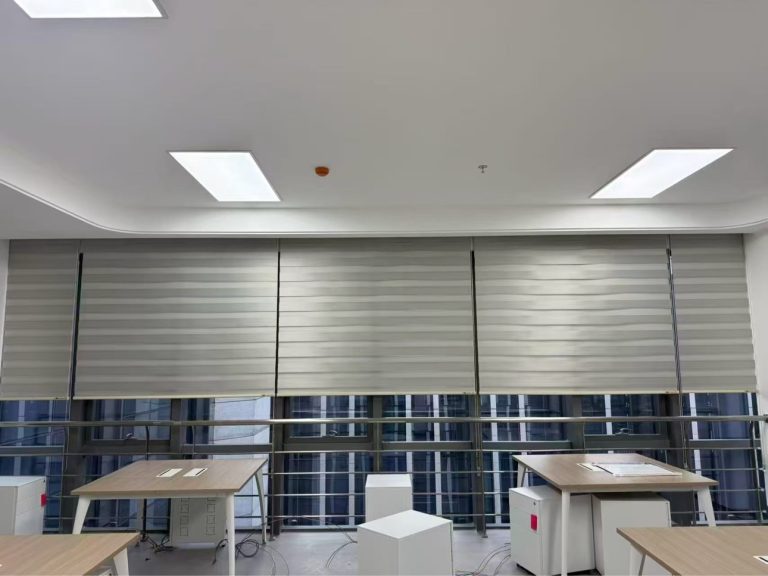
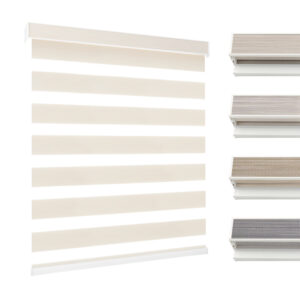
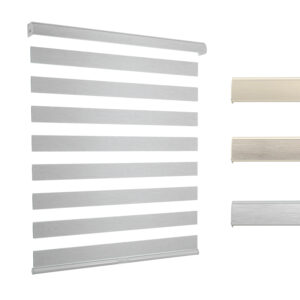
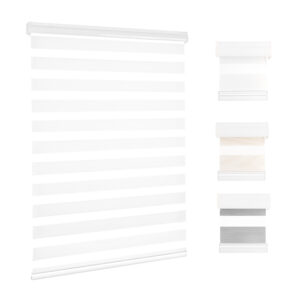
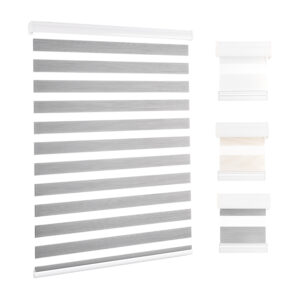
Shangri-la blinds — also called triple sheer shades — combine the soft look of sheer curtains with the light control of horizontal blinds. Their construction is distinctive:
- Two layers of sheer fabric form the front and back faces of the shade.
- Soft horizontal fabric vanes are suspended between the two sheer layers.
- When the vanes are tilted open, you get a softened view to the outside with gently filtered daylight.
- When the vanes are tilted closed, the vanes overlap and the shade becomes a privacy screen that still glows softly.
- The whole shade can also be raised fully to the top, like a roller shade, for a completely clear window.
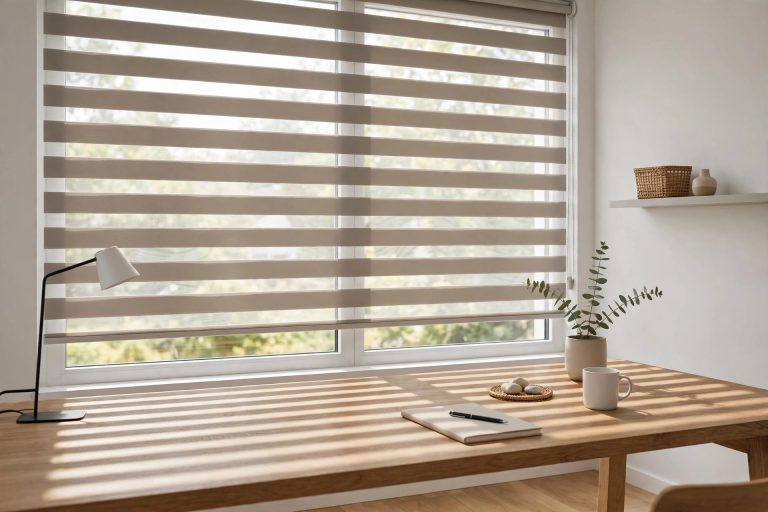
Unlike zebra blinds, where the fabric is a single dual-layer roll, shangri-la blinds have real depth: the vanes float between two sheers, which gives them a more luxurious, drapery-like appearance. That softness is exactly why interior designers specify them for living rooms, dining rooms, and master bedrooms in mid-to-high-end projects.
Shangri-La Blinds vs. Zebra Blinds: What’s the Difference?
Your customers will ask. Here is a clear comparison you can use in your showroom or catalog:
| Feature | Shangri-La Blinds | Zebra Blinds |
|---|---|---|
| Structure | Fabric vanes suspended between two sheer layers | Single fabric with alternating sheer and opaque horizontal stripes |
| Look and feel | Soft, drapery-like, premium | Clean, modern, crisp |
| View-through | Softened, diffused view | Clearer striped view |
| Light control | Tilt vanes open/closed; raise fully | Align or offset stripes; raise fully |
| Blackout ability | Light-filtering only (not a blackout product) | Available in blackout fabrics |
| Typical price position | Premium | Mid-range |
| Best rooms | Living room, dining room, master bedroom | Bedroom, office, kitchen, whole house |
The key takeaway for your sales team: shangri-la blinds are not a replacement for zebra blinds — they are an upsell. A customer who likes zebra blinds but wants something more elegant is your ideal shangri-la buyer.
Why Wholesalers and Dealers Are Adding Them to Their Lineup
Three commercial reasons:
- Differentiation. Zebra blinds are everywhere now, and price competition is brutal. Shangri-la blinds are still a specialty product with fewer suppliers, which protects your margins.
- Designer demand. Interior designers in the US and Canada actively specify sheer-style shades for premium residential projects. If you want to sell through the designer channel or a trade program, you need this product in your range.
- Higher ticket. As a premium product, shangri-la blinds lift your average order value. They also pair naturally with motorization, which lifts it further.
Key Specifications to Check With Your Manufacturer
Not all shangri-la blinds are made equal. Before you commit to a supplier, verify these specs:
- Vane sizes: The most common vane widths are in the 2-inch to 3-inch range. Larger vanes give a bolder look and a clearer view-through; smaller vanes look more refined. Ask which vane sizes your manufacturer offers.
- Fabric collections: A good manufacturer offers multiple sheer and vane fabric collections — whites and neutrals for the North American market, plus a few textured or patterned options. Ask for a physical fabric swatch book, not just photos.
- Width and height range: Confirm the maximum width for a single shade (wide sliding doors may need two shades) and the standard drop range. Made-to-measure is the norm in wholesale — confirm there is no restrictive “standard sizes only” policy.
- Operation types: Manual cord loop, cordless, and motorized should all be available. For North America, cordless and motorized options are increasingly expected (see below).
- Headrail and valance: Check the headrail finish options and whether a fabric-wrapped valance or cassette is available for a finished top treatment.
- Color coordination: The sheer layers, vanes, headrail, and bottom rail should be color-coordinated. Mismatched whites are a common quality complaint — ask how the factory controls this.
Cordless and Motorized Options for the North American Market
Two things your North American customers will ask about:
Cordless (child-safe). Cordless lift is now the default expectation for residential window coverings in the US and Canada, driven by child-safety concerns. Make sure your manufacturer offers a true cordless operating system for shangri-la blinds — not just a cord loop with a tensioner.
Motorized. Motorization is one of the strongest upsells in window coverings right now. A motorized shangri-la blind operates by remote control or a smartphone app, and can typically be integrated with common smart-home platforms. For dealers, motorized shangri-la blinds solve two selling problems at once: hard-to-reach windows (great rooms, stairwells) and the luxury pitch. Ask your supplier about battery-powered (rechargeable) versus hardwired motors, and about typical battery life under normal daily use.
What to Ask Before You Place a Wholesale Order
Use this checklist with any shangri-la blinds manufacturer:
- What is the MOQ? For wholesale blinds, MOQs are typically set per SKU, per color, or per order. Confirm the number and whether mixed colors can combine toward it.
- What is the production lead time? Standard made-to-measure orders typically take a few weeks from order confirmation and fabric approval. Confirm the timeline in writing, and ask how peak-season timing differs.
- Can I get pre-production samples? Always approve a physical sample — including the exact fabric, vane size, and operation type — before a bulk order.
- What customization is available? Custom sizes are standard; also ask about custom colors, private-label packaging, and motorization options.
- How is quality controlled? Ask about the factory’s inspection process: fabric color consistency, vane alignment, smooth operation testing, and packaging that protects the shade in transit.
- What support do you provide dealers? Fabric books, display samples, measurement guides, and marketing images all help you sell. A manufacturer invested in your success provides them.
How to Position Shangri-La Blinds in Your Catalog
A simple ladder works well for sales teams:
- Entry: Roller shades (price-driven, whole-house basics)
- Mid: Zebra blinds (style + light control, the volume seller)
- Premium: Shangri-la blinds (designer look, highest margin)
- Luxury add-on: Motorization on any of the above
Sell shangri-la blinds by room, not by window: “For the living room and master bedroom, where you want softness and elegance, our shangri-la collection…” Room-based selling raises the ticket and feels consultative rather than pushy. For the designer and contractor channel, bundle them into a trade program with dedicated pricing and sample support.
Frequently Asked Questions
Are shangri-la blinds the same as zebra blinds?
No. Zebra blinds use a single fabric with alternating sheer and opaque stripes. Shangri-la blinds suspend soft fabric vanes between two separate sheer layers, giving a softer, more drapery-like look. They sit a step above zebra blinds in price and positioning.
What is the typical MOQ for wholesale shangri-la blinds?
It varies by manufacturer and is typically set per SKU, per color, or per order. Ask your supplier for their specific MOQ structure and whether mixed colors can count toward it.
What sizes can be customized?
Shangri-la blinds are normally made to measure. Confirm the maximum single-shade width with your manufacturer — very wide openings may require two shades — and the available drop range.
Do shangri-la blinds provide enough privacy at night?
When the vanes are tilted closed, they provide good privacy while still allowing a soft glow of light. However, they are a light-filtering product, not a blackout product. For bedrooms where full darkness is needed, pair them with blackout roller shades or drapery.
How long does production usually take?
Standard made-to-measure production typically takes a few weeks after order confirmation and sample approval. Confirm timing with your manufacturer, especially during peak seasons.
Can shangri-la blinds be motorized?
Yes. Most manufacturers offer battery-powered (rechargeable) motorization with remote or app control, and some offer hardwired options for new construction. Motorization is a strong upsell for tall or hard-to-reach windows.
Get a Free Wholesale Quote
Looking for a reliable shangri-la blinds manufacturer? Sunjoy Shades has manufactured window blinds in Shaoxing, China since 2009, supplying wholesalers, dealers, and project buyers.
[Get a Free Wholesale Quote] · WhatsApp: +86 18706580010 (https://wa.me/8618706580010) · [Download Our 2026 Catalog]
About Sunjoy Shades
Shaoxing Sunjoy Group Co., Ltd. has manufactured window blinds in Shaoxing, China since 2009. Browse the full range at sunjoyshades.com, get a free wholesale quote, or reach us on WhatsApp: +86 18706580010 (wa.me/8618706580010).